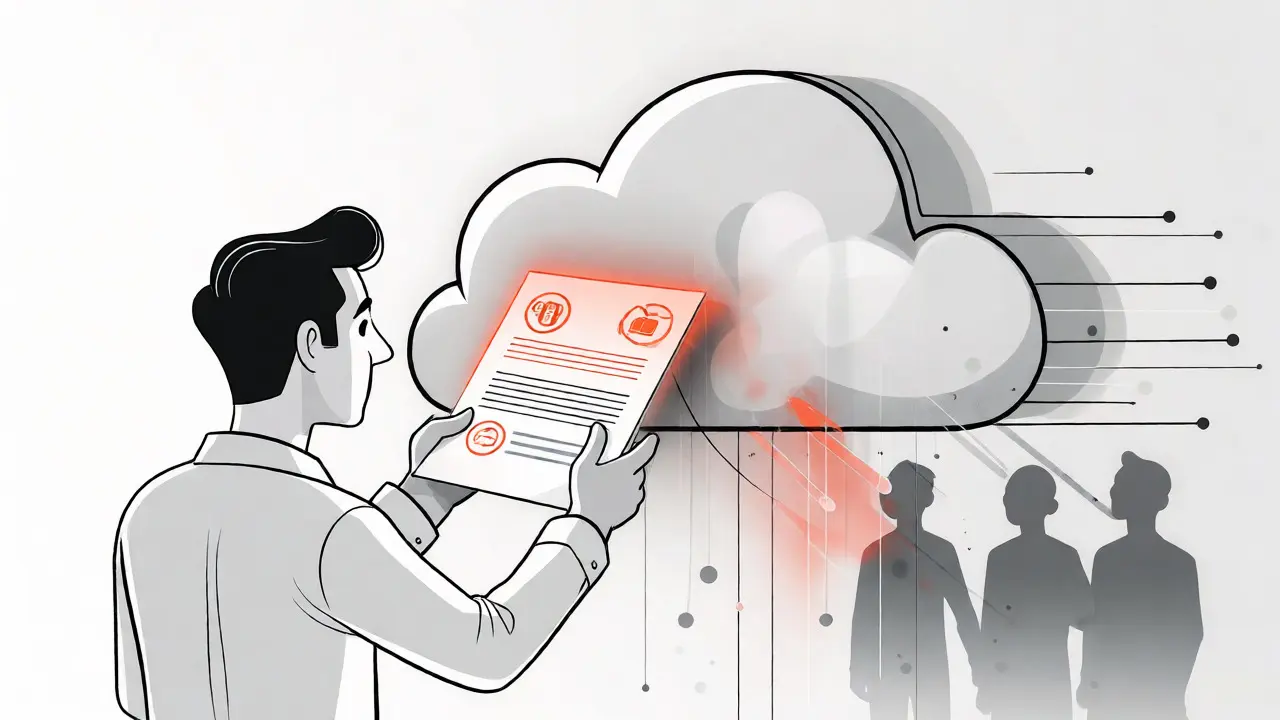
Imagine this: Your marketing team just used a public Large Language Model (LLM) to draft a press release. They pasted in a confidential product roadmap that wasn't supposed to be public yet. The model generated the text, but did it store your data? Did it leak your trade secrets to competitors? If you can't answer those questions with a specific document, date, and responsible person's name, you don't have governance-you have hope.
Hope isn't a strategy. In the rush to adopt Generative AI is a class of artificial intelligence systems capable of creating new content such as text, images, or code based on learned patterns from vast datasets, many organizations are treating these tools like magic boxes. But regulators and auditors don't buy magic. They buy evidence. This is where the AI Risk Register comes in. It’s not just a spreadsheet; it’s the central nervous system of your AI audit framework. If you’re still using generic IT risk templates for GenAI, you’re missing the point entirely. Traditional frameworks weren’t built for hallucinations, prompt injection, or shadow AI. You need a specialized tool designed for the unique chaos of generative models.
Why Standard Risk Templates Fail for GenAI
Most companies start by trying to shoehorn AI risks into their existing Enterprise Risk Management (ERM) spreadsheets. Big mistake. A standard IT risk register focuses on server uptime, network breaches, or software bugs. These are deterministic problems. Generative AI is probabilistic. When a model outputs a plausible but false fact, that’s not a bug; it’s a feature of its architecture called Hallucination. Standard templates don’t have fields for "likelihood of factual error" or "severity of IP leakage via prompt."
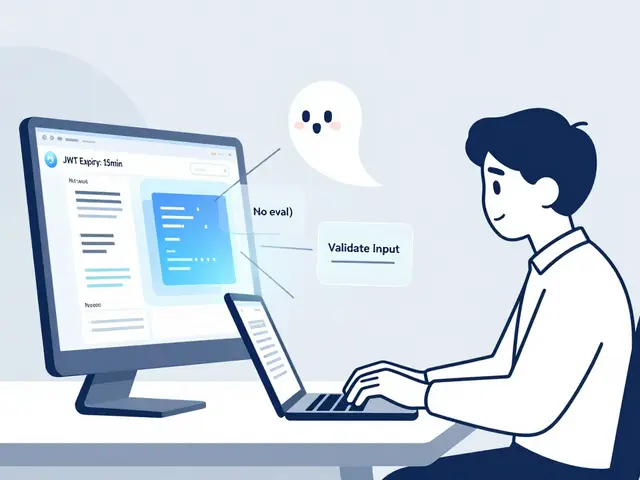
The dual-edged sword of GenAI offers massive productivity gains but opens new vectors for data exfiltration. For instance, an employee might use GitHub Copilot to write Python code. That’s great for speed. But if that code contains proprietary algorithms from Project Titan, and the model stores that snippet for training, you’ve just leaked intellectual property. A generic risk register won’t capture the nuance of "data sensitivity level" versus "model retention policy." You need a living document that tracks these specific interactions. Without it, you’re flying blind while regulators like the EU Commission or US agencies tighten their grip on AI accountability.
Anatomy of an Effective AI Risk Register
So, what does a good AI risk register actually look like? It’s not just a list of problems. It’s a structured workflow divided into three phases: Identification, Analysis, and Treatment. Let’s break down the essential columns you need. First, every entry needs a unique Risk ID for tracking. Then, specify the exact application and use case. Don’t just say "ChatGPT." Say "ChatGPT-4 for generating external marketing blog posts." Context matters because the risk profile changes drastically depending on who uses it and for what.
You also need to classify data sensitivity. Is the input Public, Internal, Confidential, or Proprietary Source Code? This classification drives the rest of the analysis. Next, describe the risk concretely. Avoid vague phrases like "security issues." Instead, write: "Exfiltration of sensitive PII through prompts entered into a public, unvetted LLM." See the difference? One is fluff; the other is actionable.
| Field | Description & Example |
|---|---|
| Risk ID | Unique identifier for tracking (e.g., GENAI-042). |
| Application & Use Case | Specific tool and context (e.g., "GitHub Copilot for Python code assistance in R&D"). |
| Data Sensitivity | Classification of input data (Public, Internal, Confidential, Proprietary). |
| Risk Description | Concrete negative outcome (e.g., "IP leakage via prompt history"). |
| Inherent Risk Score | Likelihood × Impact before controls are applied. |
| Mitigation Controls | Specific actions taken (e.g., "Block paste of 'Project Titan' regex pattern"). |
| Residual Risk Score | Risk remaining after mitigation, proving due diligence. |
| Risk Owner | Person accountable (e.g., CISO, Data Science Lead). |
In the Analysis phase, you calculate the Inherent Risk Score by multiplying Likelihood (High/Medium/Low) by Impact (Critical/High/Medium/Low). This prioritizes threats. Do you really care about a low-impact bias issue in an internal meme generator? Probably not. But a high-impact compliance violation in a customer-facing chatbot? Absolutely. Finally, in the Treatment phase, you assign a Risk Owner. Someone must be accountable. Is it the CISO? The business unit manager? Name them. And track the status: Open, Mitigated, or Accepted. If you accept a risk, document why. Auditors love documented acceptance.
Leveraging Frameworks: NIST and Beyond
You don’t need to invent this from scratch. The NIST AI Risk Management Framework (AI RMF) provides the authoritative structure. Released in January 2023, it outlines four core functions: Govern, Map, Measure, and Manage. In July 2024, NIST released the Generative AI Profile (NIST AI 600-1), which specifically addresses risks like hallucination, data leakage, and prompt injection. Using this profile gives you a common language with regulators and partners.
Another valuable resource is the MIT AI Risk Repository. It’s a living database with over 1,700 AI risks categorized by cause and domain. Instead of guessing what could go wrong, you can reference established taxonomies like "False or misleading information" or "Causal Taxonomy of AI Risks." This saves time and ensures you aren’t overlooking obscure but critical threats. Microsoft’s AI Security and Governance Guidance also complements these by emphasizing threat modeling and vendor oversight. Remember, GenAI must be governed as part of your broader risk program, not as a siloed innovation project. If your legal team doesn’t know about the AI pilot, you’re already out of compliance.
Technical Controls and Human Oversight
A risk register lists the problems, but controls solve them. What kind of controls should you document? Technical ones first. Implement guardrails and safety layers. Use filters to block unsafe outputs or policy checks to limit unintended behavior. For example, enforce the use of corporate accounts with Single Sign-On (SSO) so you can track who used what. Block paste/upload of content matching specific regex patterns, like "Project Titan," to prevent accidental IP leaks.
But technology alone isn’t enough. You need human oversight. Establish a cross-functional AI governance committee with members from security, legal, IT, and business units. They meet regularly to review the risk register and update the Acceptable Use Policy (AUP). This policy defines sanctioned tools, permissible data types, and user responsibilities. Conduct red-team testing and adversarial validation to stress-test your systems. Try to break your own chatbot. Can you trick it into revealing system prompts? Can you make it generate biased content? Document these tests. Audit trails are crucial here. Centralize logging of all AI interactions-prompts, responses, user IDs, timestamps. This creates an unimpeachable audit trail. If a regulator asks, "What did the model say to Customer X on Tuesday?", you can pull the log instantly.

Implementation Roadmap: From Chaos to Control
Ready to build yours? Start small. Don’t try to inventory every AI interaction in the company overnight. Begin with high-risk use cases. Identify where employees are using public LLMs with sensitive data. Create a structured inventory of all AI systems in use or development. Include ownership, intended function, risk classification, and update history. This inventory is the foundation of your register.
Next, define your approval processes. Who signs off on a new AI tool? What documentation is required? Set up escalation protocols for incidents. If a model starts hallucinating wildly in production, who gets paged? Develop clear lines of responsibility. Designate a Chief AI Officer or equivalent role to oversee strategy and risk appetite. Integrate your AI-specific risk register with your enterprise risk management framework. This ensures AI risks aren’t ignored during quarterly board reviews.
Finally, commit to continuous monitoring. Apply the "30% rule" heuristic: assume 30% of your AI usage will involve unexpected edge cases or shadow AI until proven otherwise. Review your risk register monthly, not annually. New models launch every week. Threat landscapes change. A control that worked for GPT-3.5 might fail for GPT-5. Keep it living. Update it as organizational use cases evolve. Demonstrate due diligence through residual risk scoring. Show that you didn’t just identify the risk; you reduced it to an acceptable level.
Frequently Asked Questions
What is the main difference between an AI risk register and a standard IT risk register?
A standard IT risk register focuses on deterministic issues like server downtime or software bugs. An AI risk register addresses probabilistic risks unique to generative models, such as hallucinations, prompt injection, data leakage via prompts, and algorithmic bias. It requires specific fields for data sensitivity levels, model retention policies, and output accuracy metrics that traditional IT registers lack.
How often should we update our AI risk register?
You should review and update your AI risk register at least monthly. Given the rapid pace of AI development, new models, vulnerabilities, and regulatory updates emerge frequently. Major events, such as launching a new AI tool, changing a vendor, or experiencing an incident, should trigger an immediate ad-hoc review.
Who should own the AI risk register?
Ownership typically falls to a designated Chief AI Officer, CISO, or a cross-functional AI governance committee. However, individual entries within the register must have specific Risk Owners, such as business unit managers or data science leads, who are accountable for mitigating those specific risks. Accountability must be explicit, not shared vaguely across departments.
Can we use Excel for our AI risk register?
Yes, Excel or Google Sheets works well for starting out, especially for smaller organizations. However, as the number of AI use cases grows, you may need specialized GRC (Governance, Risk, and Compliance) software that integrates with your enterprise risk management framework. The key is maintaining version control and ensuring easy access for auditors, regardless of the tool used.
What is "Shadow AI" and how do we document it?
Shadow AI refers to the unauthorized use of AI tools by employees without IT or security approval. To document it, include a "Shadow AI Discovery" section in your register. Track instances where employees use personal accounts or unvetted tools. Mitigation controls might include blocking certain domains on company networks or providing approved alternatives to reduce reliance on shadow tools.
 Artificial Intelligence