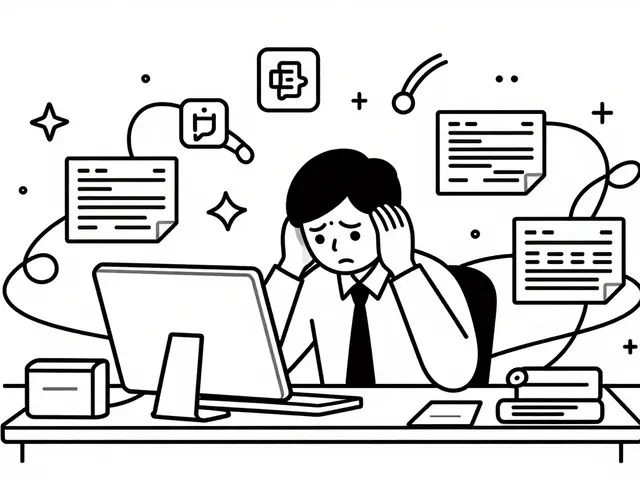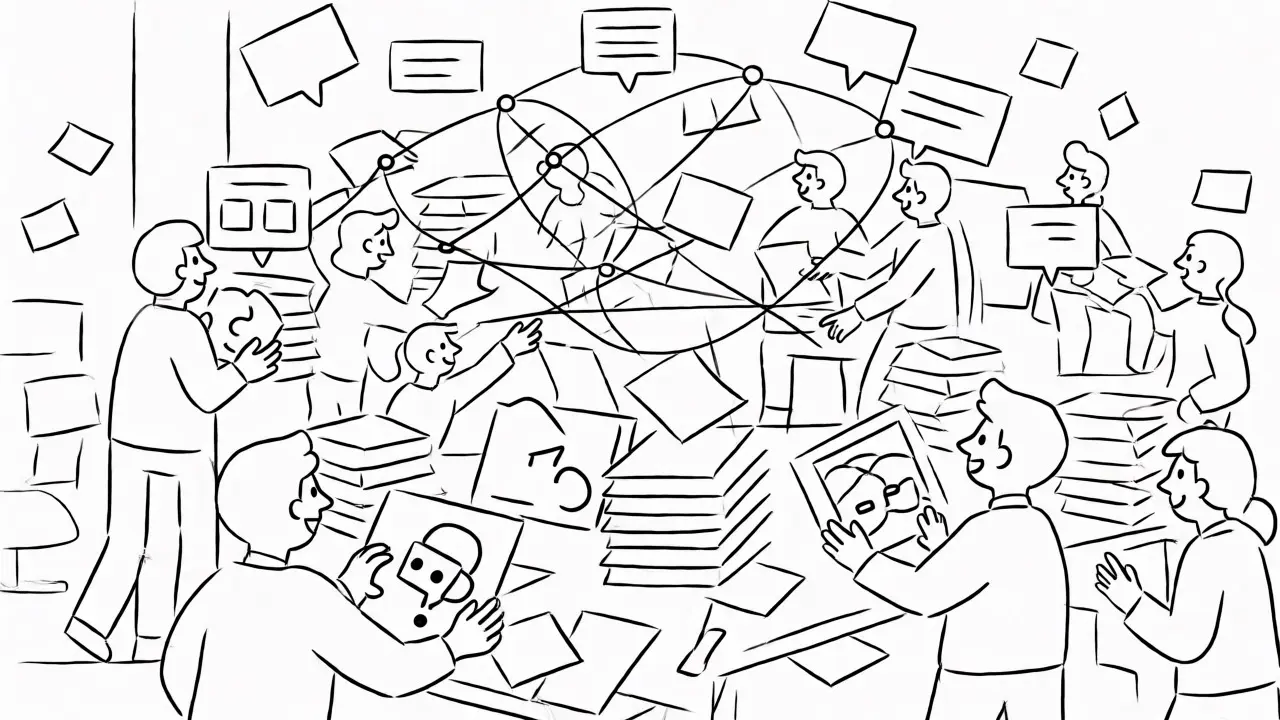
You know that feeling when you ask an AI to write a marketing email, and it sounds like a robot trying too hard? Then you tweak the prompt, get better results, and think, "I should save this." But where do you save it? A sticky note? A Slack message? Three months later, your new hire asks the same question, gets a mediocre answer, and reinvents the wheel. That chaos is exactly what centralized prompt libraries solve. They aren't just folders of text; they are the backbone of AI governance, turning scattered experiments into standardized business assets.
Think of a prompt library as the style guide for your company's relationship with artificial intelligence. Without one, every department speaks a different language to the model. Marketing might use flowery prose, while Engineering wants concise bullet points. The result is inconsistent output and wasted time. With a centralized system, you create a single source of truth. This isn't about restricting creativity; it's about scaling reliability. When 78% of Fortune 500 companies already use some form of prompt management, ignoring this shift means falling behind in operational efficiency.
Why Ad-Hoc Prompts Fail at Scale
Let's be honest: most teams start using AI by copy-pasting prompts from Twitter or Reddit. It works fine for one person. But when ten people do it, things break. You end up with version control nightmares. Who owns the "best" prompt for customer support tickets? Is it the one Sarah used last Tuesday, or the one Mike tweaked yesterday? There’s no audit trail, no performance data, and no way to know if a change actually improved the outcome.
The cost of this disorganization is real. Organizations without structured prompt management report slower task completion and lower quality consistency. In contrast, those with curated libraries see significant gains-some reporting up to 43% faster task completion. Why? Because employees don’t have to guess. They pull a proven template, adjust variables, and hit go. It transforms AI from a magic trick into a predictable tool.
Moreover, ad-hoc prompts create security risks. If anyone can paste any text into ChatGPT or Claude, sensitive data might leak into public models. A centralized library often sits behind a gateway that filters inputs, ensuring compliance before the request even reaches the LLM (Large Language Model). This layer of governance is critical for regulated industries like finance and healthcare.
Anatomy of a Robust Prompt Library
A simple spreadsheet won't cut it for serious enterprises. You need a system designed for discovery, collaboration, and versioning. Here’s what separates a toy box from a professional library:
- Intelligent Search: Basic keyword search fails when you describe a problem instead of naming a file. Modern libraries use semantic search, understanding intent. If you type "write a polite rejection," it finds prompts tagged with "customer service" and "tone: empathetic," even if those words aren't in the title.
- Version Control & History: Just like code, prompts evolve. You need to see who changed what and why. Did v2 perform worse than v1? The system should track metrics like response length, user satisfaction scores, or token usage.
- Multi-Model Compatibility: Your team uses GPT-4, Claude 3, and maybe Gemini. A good library tags prompts by model compatibility. Some prompts work great on GPT-4 but confuse Claude. Automatic routing ensures the right prompt goes to the right model.
- Role-Based Access Control (RBAC): Not everyone needs edit rights. Interns might only view approved templates. Senior engineers might propose changes. Managers approve them. This hierarchy prevents accidental degradation of high-value assets.
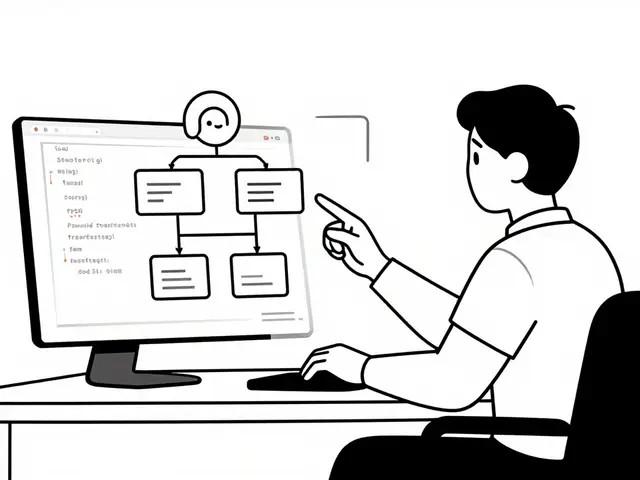
Consider the architecture. Enterprise-grade solutions integrate directly with APIs, allowing developers to fetch prompts programmatically. This means your backend application doesn't hardcode strings; it pulls the latest approved version from the library. Update the prompt in the library, and every app using it updates instantly. No redeployment needed.
Governance: The Invisible Hand
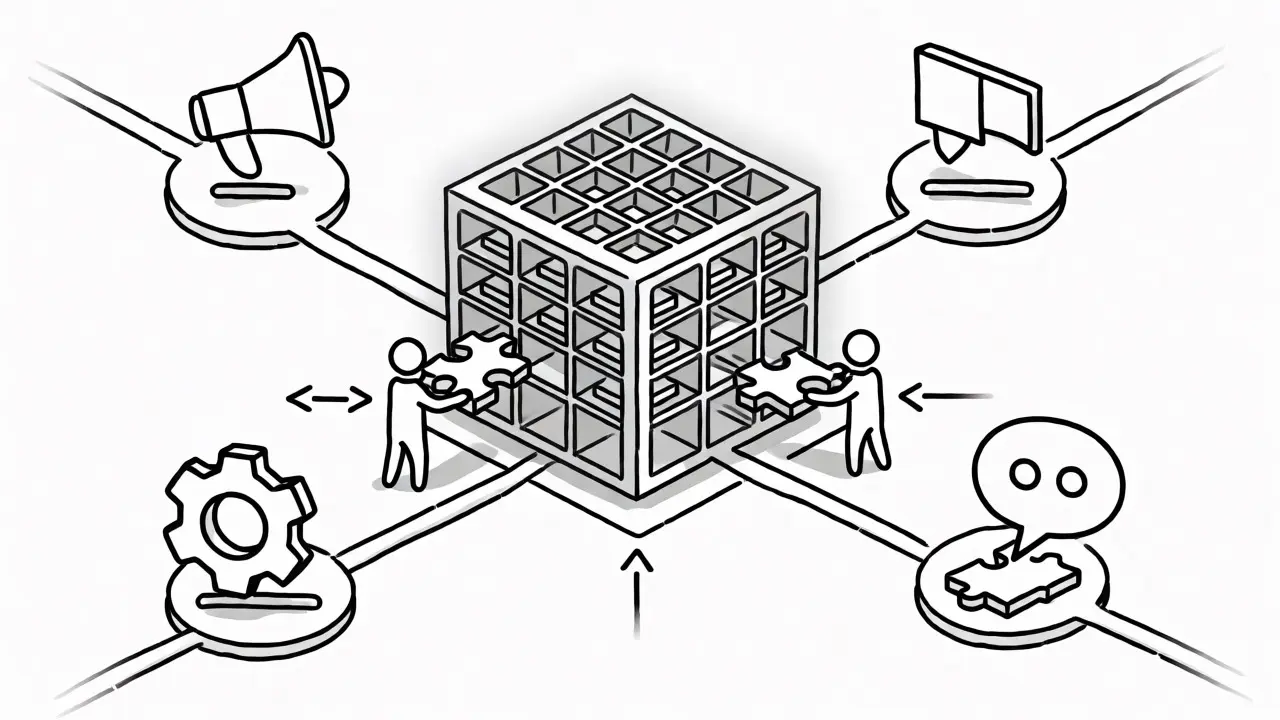
Governance isn't just about rules; it's about accountability. Who is responsible for the quality of AI outputs? In a centralized library, you assign "Prompt Stewards." These are domain experts-maybe a senior copywriter for marketing prompts, or a lead developer for code generation tasks. Their job is to review submissions, test effectiveness, and retire outdated patterns.
This human-in-the-loop approach addresses a common fear: stagnation. AI models update rapidly. A prompt that worked perfectly in January might produce hallucinations by June. Regular audits, scheduled quarterly, ensure the library stays relevant. MIT researchers warn that over-reliance on static standards creates blind spots. Governance mitigates this by mandating refresh cycles.
| Feature | Ad-Hoc / Spreadsheet | Enterprise Prompt Library |
|---|---|---|
| Discovery | Manual search, tribal knowledge | Semantic search, auto-tagging |
| Consistency | Low, varies by user | High, standardized outputs |
| Security | Risk of data leakage | RBAC, audit logs, SOC 2 compliance |
| Collaboration | Email threads, chat messages | Real-time editing, comments, approvals |
| Maintenance | Reactive, sporadic | Proactive, scheduled audits |
Implementation Roadmap: From Chaos to Order
Don't try to boil the ocean. Rolling out a prompt library takes planning. Based on successful case studies, here is a realistic four-phase approach:
- Prompt Inventory (Weeks 1-3): Audit existing usage. Ask teams: "What do you ask AI daily?" Collect their best attempts. Don't judge yet; just gather.
- Framework Design (Weeks 4-5): Define your taxonomy. How will you categorize? By department? By task type (summarization, translation, coding)? Decide on metadata fields: difficulty level, model dependency, owner.
- Pilot Implementation (Weeks 6-9): Start with one high-impact team, like Customer Support or Content Marketing. Deploy the library to them. Train users. Gather feedback on usability.
- Scale & Automate (Weeks 10+): Expand to other departments. Integrate with your workflow tools (Slack, Jira, Salesforce). Set up automated testing pipelines that flag underperforming prompts.
A common pitfall? Neglecting maintenance. One startup CTO shared how their homegrown library failed because they didn't assign owners. Within six months, 68% of prompts were obsolete due to model updates. Treat the library like production code. It needs care, feeding, and regular refactoring.
Measuring Success: Beyond Vibes
How do you know if your library is working? Stop relying on gut feelings. Track concrete metrics:
- Time-to-Value: Measure how long it takes a new employee to generate a high-quality first draft. Before the library: 45 minutes. After: 12 minutes.
- Reuse Rate: What percentage of AI interactions use a library prompt versus a custom one? High reuse indicates trust and standardization.
- Error Reduction: Track support tickets related to incorrect AI outputs. Did they drop after implementing standardized prompts?
- Cost Efficiency: Better prompts often require fewer tokens or retries. Monitor API costs per task. A well-curated library can reduce token consumption by optimizing instructions.
Forrester analysis suggests enterprise libraries deliver 3.2x higher ROI than basic implementations. This isn't just about saving time; it's about unlocking higher-value work. When routine generation is handled by trusted templates, humans focus on strategy and nuance.
The Future: Prompts as Infrastructure
We are moving toward a world where prompts are treated like software dependencies. Imagine a CI/CD pipeline for prompts. When you push a new model version, your library automatically tests all stored prompts against it. If a prompt breaks, the system alerts the steward. Anthropic and other labs are already exploring "prompt-to-fine-tuning" pipelines, where high-performing prompts inform model adjustments.
Furthermore, integration with AI agents is imminent. Gartner predicts that by 2028, most enterprise libraries will orchestrate multi-step agent workflows, not just single-turn chats. Your library will store complex sequences: "Research topic -> Draft outline -> Write section -> Edit for tone." These compound patterns become the building blocks of autonomous business processes.
Start small, but start now. The gap between companies with mature prompt governance and those still pasting into web interfaces will widen. Don't let your organization drown in unmanaged AI noise. Build the library. Assign the stewards. Standardize the signal.
Do I need specialized software for a prompt library?
Not necessarily. Small teams can start with a shared Notion database or GitHub repository. However, as usage grows, you'll need features like semantic search, version control, and API access, which typically require specialized platforms like TextExpander AI, AICamp, or custom-built solutions.
Who should own the prompt library?
Ownership should be distributed. Assign "Prompt Stewards" within specific departments (e.g., Marketing, Engineering) who understand the domain. A central AI Governance team oversees the overall framework, security, and cross-departmental standards.
How often should we update our prompts?
Review quarterly at minimum. Major AI model releases (like GPT-4o or Claude 3.5) should trigger an immediate audit. Additionally, monitor performance metrics weekly; if a prompt's success rate drops, investigate immediately.
Can prompt libraries handle multiple AI models?
Yes, advanced libraries tag prompts by model compatibility. Some systems even offer automatic routing, sending a prompt to the most cost-effective or capable model based on the task complexity defined in the library entry.
What is the biggest risk in managing a prompt library?
Stagnation. If no one maintains the library, it becomes a graveyard of outdated prompts. Users will stop trusting it and revert to ad-hoc experimentation. Active curation and clear ownership are essential to prevent decay.
 Artificial Intelligence