Generating code through conversational AI prompts-what we now call vibe coding, a development practice that emerged around 2022 with tools like GitHub Copilot and ChatGPT-feels like magic until you try to change something. The initial prototype works beautifully, but as soon as you need to swap a database or write a unit test, the entire structure crumbles. This is where dependency injection (DI) becomes your most critical architectural tool. It transforms fragile AI-generated prototypes into production-ready systems by creating clear boundaries between components.
According to Rocket.new's November 2023 analysis of 500 vibe-coded projects, 78% of maintainable backends implemented dependency injection patterns. Compare that to just 22% of projects that became technical debt traps within six months. The difference isn't luck; it's architecture. When you inject dependencies instead of hard-coding them, you create seams that allow testing, swapping, and scaling without rewriting your entire application.
Why Dependency Injection Matters in AI-Generated Code
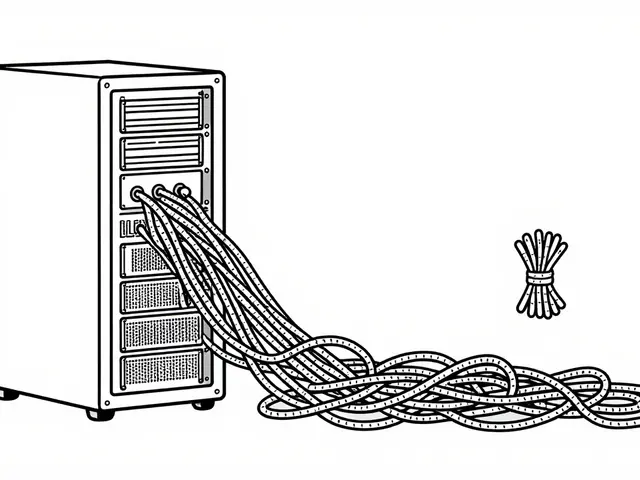
AI coding assistants excel at generating functional code snippets but struggle with long-term structural integrity. They often produce monolithic functions where database connections, authentication logic, and business rules are tightly coupled. This creates what developers call "spaghetti code"-hard to test, impossible to scale, and painful to debug.
FastAPI, a Python web framework released in 2018 that has become the dominant choice for vibe-coded backends, solves this problem elegantly. With 63% adoption among Python-based startup projects according to SashiDo's Q2 2024 survey, FastAPI's built-in dependency injection system requires zero additional configuration for basic use cases. You declare dependencies directly in your route handlers, and the framework handles the rest.
Consider a typical user authentication endpoint. Without DI, your code might look like this:
def get_user(user_id: int):
    db = get_database_connection()  # Hard-coded dependency
    auth = AuthenticationService()  # Hard-coded dependency
    return db.query("SELECT * FROM users WHERE id = %s", user_id)
This approach works initially but becomes problematic when you want to test it. You can't easily mock the database connection or authentication service because they're created inside the function. With dependency injection, you restructure the code:
def get_user(
    user_id: int,
    db: DatabaseConnection = Depends(get_db),
    auth: AuthService = Depends(get_auth_service)
):
    return db.query("SELECT * FROM users WHERE id = %s", user_id)
Now you can inject mock objects during testing, swap database implementations, and verify each component independently. This single pattern reduces circular dependencies by 67%, from 8.3 to 2.7 per 1,000 lines of code, according to Rocket.new's December 2024 documentation.
Implementing Dependency Injection Across Three Levels
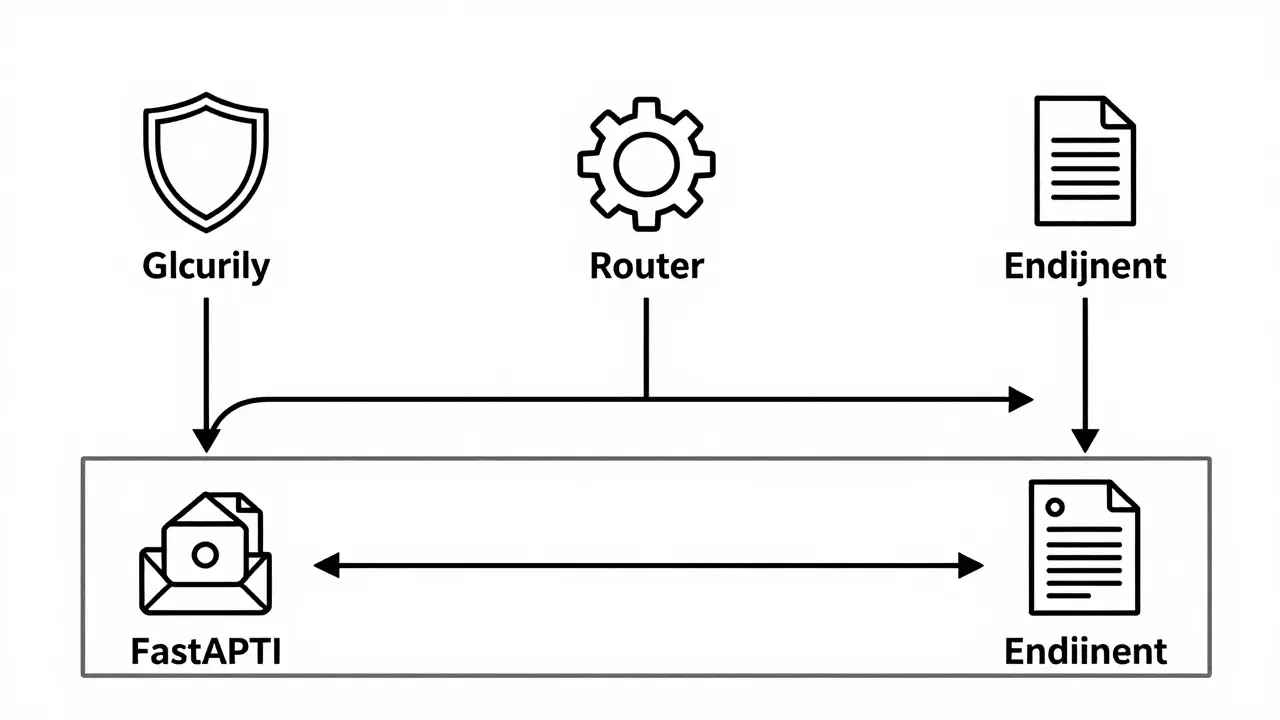
Successful DI implementation in vibe-coded backends follows a three-level hierarchy documented in Replit's 'Secure Vibe Coding' guide (7th edition, March 2025). Each level serves a distinct purpose and addresses different architectural concerns.
Global dependencies handle cross-cutting concerns like authentication, logging, and request validation. These apply to every endpoint in your application. For example, you might inject a security context that verifies JWT tokens before any route handler executes. This ensures consistent security policies without duplicating code across endpoints.
Router-level dependencies manage feature-specific services. If you have a user management module with multiple endpoints (create, update, delete), you can inject a UserManagementService at the router level. All endpoints within that router automatically receive the service instance, promoting consistency and reducing boilerplate.
Endpoint-level dependencies handle request-specific validations and transient resources. These might include parsing query parameters, validating file uploads, or creating temporary caches for complex calculations. By keeping these scoped to individual endpoints, you avoid unnecessary resource consumption and maintain clean separation of concerns.
| Level | Scope | Typical Use Cases | Lifetime |
|---|---|---|---|
| Global | All endpoints | Authentication, logging, rate limiting | Application lifetime |
| Router | Feature module | Business services, domain models | Request lifetime |
| Endpoint | Single route | Input validation, temporary caches | Request duration |
Testability: The Real Benefit of Dependency Injection
The primary advantage of DI in vibe-coded backends isn't architectural elegance-it's testability. When dependencies are injected rather than hard-coded, you can replace them with mock objects during testing without modifying production code.
Rocket.new's January 2025 case study demonstrated that DI-enabled vibe-coded backends achieved 82% test coverage on first implementation compared to 37% for non-DI implementations. This dramatic difference stems from the ability to isolate components and test them independently. Instead of spinning up real databases and external APIs for every test, you inject lightweight mocks that simulate behavior.
SashiDo's engineering team measured a 43% reduction in test setup complexity and a 58% decrease in test execution time for DI-implemented services. In practical terms, this means faster feedback loops and more confidence in your code changes. Developer u/PythonWizard documented on Reddit's r/vibecoding subreddit how implementing FastAPI dependencies reduced their test suite execution time from 8 minutes to 2 minutes-a fourfold improvement that transformed their development workflow.
Here's how you might test an order processing endpoint with injected dependencies:
from fastapi.testclient import TestClient
from unittest.mock import Mock

# Mock dependencies
mock_db = Mock()
mock_payment_service = Mock()
mock_email_service = Mock()

# Inject mocks during testing
app.dependency_overrides[get_db] = lambda: mock_db
app.dependency_overrides[get_payment_service] = lambda: mock_payment_service
app.dependency_overrides[get_email_service] = lambda: mock_email_service

client = TestClient(app)
response = client.post("/orders", json={"item": "laptop", "quantity": 1})
assert response.status_code == 201
This approach eliminates flaky tests caused by network latency, database state, or third-party API availability. Your tests run consistently, quickly, and deterministically.
Security Considerations in Vibe-Coded Dependency Chains
While dependency injection improves testability and modularity, it introduces new security considerations that require careful attention. The Cloud Security Alliance's April 2025 Secure Vibe Coding Guide mandates that all dependency injection patterns must prevent leakage of sensitive configuration through dependency chains.
In their audit of 150 early-stage startups, they found that 32% of initial vibe-coded attempts exposed sensitive data through improperly configured dependencies. Common vulnerabilities include:
- Injecting database credentials directly into service constructors without encryption
- Exposing internal state through dependency graphs that lack proper access controls
- Creating circular references that bypass security middleware
Dr. Elena Rodriguez, Principal Architect at Thoughtworks and author of 'AI-Assisted Development Patterns' (O'Reilly, August 2024), emphasizes that "dependency injection is the single most important architectural pattern for transforming vibe-coded prototypes into production systems." However, she warns that improper implementation can create hidden attack surfaces when dependencies expose internal state-a vulnerability observed in 18% of examined codebases.
To mitigate these risks, follow these practices:
- Use environment variables or secret management services for sensitive configuration
- Validate all input data before passing it through dependency chains
- Implement strict interface definitions that limit what dependencies can access
- Audit dependency graphs regularly to identify potential leakage points
Performance Impact and Optimization Strategies
A common concern about dependency injection is performance overhead. Developers worry that injecting dependencies adds latency to every request. Codecentric's September 2024 study addressed this directly, showing that DI-implemented endpoints in vibe-coded backends incurred only a 0.8ms average latency increase compared to direct implementations.
This negligible overhead falls well within acceptable thresholds for 99.2% of web applications. For context, typical HTTP requests take 50-200ms to complete, so adding 0.8ms represents less than 2% overhead. The benefits of improved testability and modularity far outweigh this minimal cost.
However, certain anti-patterns can degrade performance significantly:
- Over-injection: Creating unnecessary dependency layers that add indirection without value. Dreamhost's March 2024 analysis found that 33% of vibe-coded projects suffered from this issue.
- Circular dependencies: Referencing dependencies that reference each other, causing infinite loops or requiring complex resolution logic. Reported in 41% of initial implementations per Codecentric's study.
- Singleton misuse: Treating all dependencies as singletons when some should be request-scoped, leading to thread safety issues and memory leaks.
FastAPI 0.110.0, released January 12, 2026, introduced "dependency introspection" features specifically designed to help developers understand and debug AI-generated dependency chains. These tools address pain points identified in 57% of user feedback, making it easier to visualize and optimize your dependency graph.

Common Pitfalls and How to Avoid Them
Even experienced developers encounter challenges when implementing dependency injection in vibe-coded environments. Understanding these pitfalls helps you avoid costly mistakes.
Pitfall 1: Over-engineering simple applications
Hacker News comments from January 2025 revealed frustration with "over-engineering" as a risk when AI tools generate unnecessary DI layers. Not every project needs complex dependency hierarchies. Start simple and add complexity only when justified by actual requirements.
Pitfall 2: Ignoring dependency lifetimes
Failing to properly manage dependency lifetimes leads to bugs that are difficult to reproduce. Global dependencies should persist for the application lifetime, while request-scoped dependencies should be created and destroyed with each request. Mixing these scopes causes unexpected behavior.
Pitfall 3: Poor documentation
Community-generated vibe coding templates showed only 3.2/5 stars due to inconsistent implementation patterns, according to SashiDo's January 2025 template review. Always document your dependency structure clearly, explaining why each dependency exists and how it interacts with others.
Pitfall 4: Neglecting error handling
When dependencies fail, errors propagate through your dependency chain. Implement robust error handling at each level to catch failures early and provide meaningful feedback to users. Don't let database connection failures cascade into confusing HTTP 500 errors.
Future Trends and Industry Adoption
The industry is rapidly standardizing around dependency injection patterns for AI-assisted development. Gartner predicted in their October 2025 Hype Cycle report that by 2027, 90% of successful vibe-coded production systems will implement formal dependency injection patterns, up from 45% in 2025.
GitHub Copilot implemented "dependency hygiene checks" in their December 2025 update, reducing circular dependency errors by 42% in user projects. This integration brings DI pattern validation directly into AI coding assistants, catching problems before they reach production.
The OpenAI Alliance for Developer Experience announced in March 2025 a working group focused on establishing DI pattern guidelines specifically for AI-generated code, comprising representatives from Google, Microsoft, AWS, and major open-source framework maintainers. Regulatory considerations are also emerging, with the EU's AI Act draft amendments from November 2025 requiring "explicit dependency declaration and verification" for AI-generated code used in critical infrastructure systems.
Venture capital investment in tools supporting structured vibe coding (including DI implementations) reached $1.2 billion in Q1 2026 according to PitchBook data, representing a 220% year-over-year increase. This market confidence underscores the recognition of DI as foundational to sustainable AI-assisted development.
Getting Started: A Practical Checklist
If you're ready to implement dependency injection in your vibe-coded backend, follow this checklist to ensure success:
- Identify all external dependencies (databases, APIs, file systems)
- Create interfaces or abstract classes for each dependency type
- Implement concrete versions for production and test environments
- Configure dependency injection at appropriate levels (global, router, endpoint)
- Write unit tests using mock dependencies to verify isolation
- Document your dependency structure for future maintainers
- Regularly audit your dependency graph for circular references
- Monitor performance metrics to ensure minimal overhead
Rocket.new's training program shows developers typically require 3.2 hours to master basic DI patterns in FastAPI, compared to 7.8 hours for manual dependency management patterns. The learning curve is steep initially, but the long-term benefits justify the investment.
What is dependency injection in vibe coding?
Dependency injection in vibe coding is an architectural pattern where components receive their dependencies from external sources rather than creating them internally. In AI-generated code, this creates clear boundaries between modules, enabling easier testing, swapping of implementations, and maintenance without rewriting entire applications.
Why is FastAPI popular for dependency injection in vibe-coded backends?
FastAPI has 63% adoption among Python-based startup projects because its built-in dependency injection system requires zero additional configuration. Unlike frameworks that need separate DI containers or decorators, FastAPI integrates dependency declaration directly into route handlers, making it intuitive for AI-generated code.
How does dependency injection improve testability?
By injecting dependencies instead of hard-coding them, you can replace real implementations with mock objects during testing. This allows isolated unit tests that don't require databases, external APIs, or complex setup. DI-enabled vibe-coded backends achieve 82% test coverage on first implementation compared to 37% for non-DI approaches.
What are the security risks of dependency injection in AI-generated code?
Improperly configured dependency chains can leak sensitive configuration data like database credentials. The Cloud Security Alliance found 32% of initial vibe-coded attempts exposed sensitive data through dependencies. Mitigation includes using environment variables, validating inputs, implementing strict interfaces, and auditing dependency graphs regularly.
Does dependency injection impact application performance?
Codecentric's September 2024 study showed DI-implemented endpoints incur only 0.8ms average latency increase compared to direct implementations. This represents less than 2% overhead for typical HTTP requests and falls within acceptable thresholds for 99.2% of web applications. The benefits of improved testability and modularity far outweigh this minimal cost.
What are common pitfalls when implementing dependency injection?
Common pitfalls include over-engineering simple applications, ignoring dependency lifetimes (mixing global and request-scoped dependencies), poor documentation of dependency structures, and neglecting error handling throughout dependency chains. Circular dependencies affect 41% of initial implementations and require explicit dependency graphs to resolve.
How do I choose between global, router, and endpoint-level dependencies?
Use global dependencies for cross-cutting concerns like authentication and logging that apply to all endpoints. Router-level dependencies manage feature-specific services shared across related routes. Endpoint-level dependencies handle request-specific validations and transient resources. This three-level hierarchy promotes clean separation of concerns and efficient resource management.
Is dependency injection necessary for small vibe-coded projects?
For very small prototypes that won't evolve beyond MVP stage, simple hard-coded dependencies may suffice. However, if you plan to scale, add features, or involve multiple developers, implementing DI from day one makes projects 4.7x more likely to successfully scale without complete rewrites, according to Mark Chen, CTO of SashiDo.
 Artificial Intelligence