

You’ve built a powerful Large Language Model. Maybe it’s a fine-tuned Llama 3 or a custom transformer that actually understands your company’s jargon. Now comes the hard part: where do you run it? If you throw it all into the public cloud, your bill spikes every time traffic surges, and legal gets nervous about data leaving the building. If you keep it strictly on-premises, you’re stuck with fixed capacity that either sits idle most of the day or crashes when users flood in during quarter-end reports.
Most enterprises are realizing there isn’t one right answer. Hybrid Cloud is an architecture combining private on-premises infrastructure with public cloud resources to optimize cost, security, and scalability for AI workloads. By late 2025, this approach has become the standard for large-scale LLM serving, not just a buzzword. IDC data suggests over 85% of enterprise AI deployments now use some form of hybrid setup. Why? Because it lets you keep sensitive data locked down while bursting compute power out to the cloud when demand hits. But getting it right requires more than just plugging two networks together. You need specific strategies for routing, memory management, and compliance.
Why Pure Cloud or Pure On-Prem Fails for LLMs
Let’s be honest: neither extreme works well for serious LLM operations. Running everything on-prem gives you control, but scaling is painful. Adding GPUs takes months of procurement and installation. If your model suddenly goes viral, you can’t spin up new hardware overnight. Plus, maintaining a cluster of NVIDIA H100s costs roughly $1.2-1.8 million annually for a mid-sized firm, even if they aren’t fully utilized.
Pure cloud solves the scaling issue but creates new headaches. Data sovereignty laws like GDPR in Europe or HIPAA in US healthcare make moving raw customer data to AWS or Azure risky. Even if you anonymize it, latency becomes a killer. Sending requests across the internet adds 15-40ms of delay. For real-time chatbots or financial trading bots, that lag feels sluggish. Worse, egress fees from cloud providers can surprise you. Moving terabytes of inference logs out of the cloud costs real money.
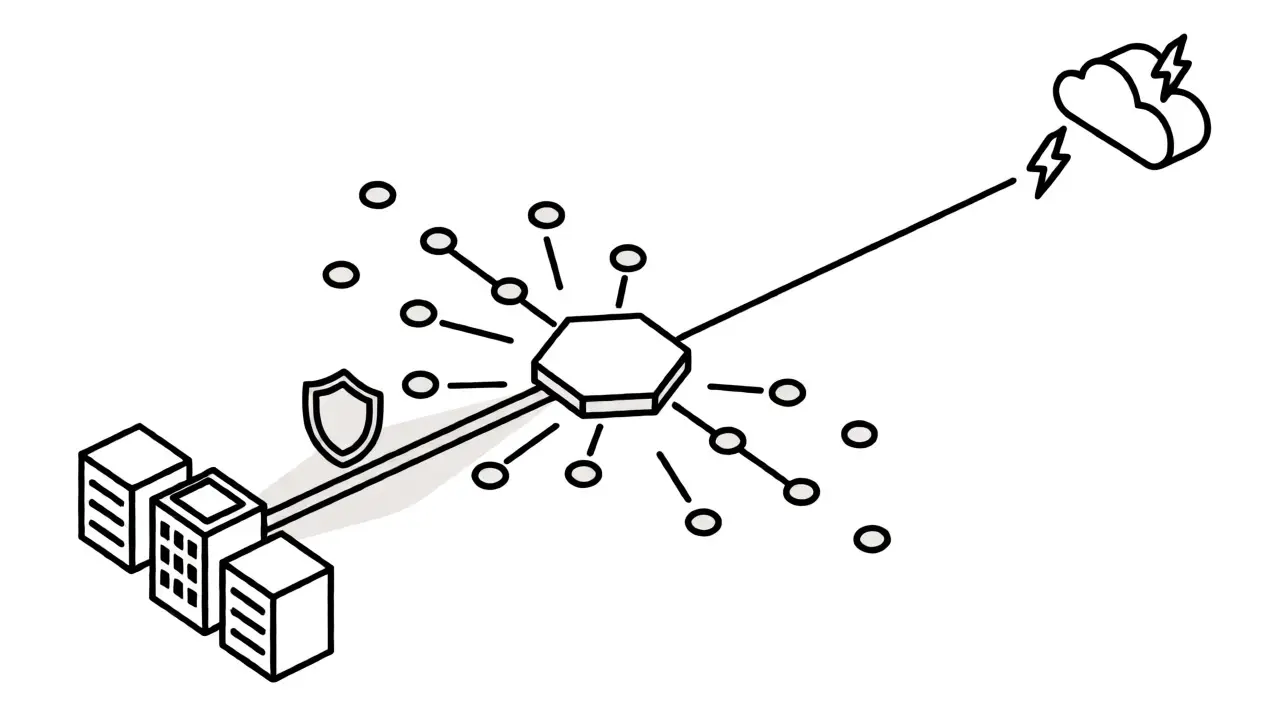
The hybrid model bridges these gaps. It uses On-Prem Infrastructure is private data center hardware dedicated to storing sensitive data and handling baseline inference loads for steady-state traffic and secure data storage. Then, it leverages Public Cloud is elastic computing resources used for burst capacity, heavy training tasks, and non-sensitive processing for peak loads. This "cloud bursting" strategy allows you to pay for what you use without sacrificing security or speed for critical paths.
Architectural Patterns That Actually Work
Not all hybrid setups are created equal. There are three main patterns, and choosing the wrong one will hurt your performance.
Single-Model Serving: This maps one model to one service instance. It’s simple and great for small apps, but it scales poorly. If you have ten different models, you need ten separate deployments. It wastes GPU memory because each instance reserves its own VRAM, even if idle.
Multi-Model Serving: Here, multiple models share the same GPU resources. The system dynamically loads and unloads models based on traffic. This saves money and improves utilization. However, switching models takes time (cold starts), which can spike latency. It’s best for scenarios where many users access different specialized models infrequently.
Hybrid Priority-Based Routing: This is the gold standard for large enterprises. It combines dedicated on-prem resources for high-priority, low-latency requests with shared cloud resources for bulk processing. A smart router directs traffic based on sensitivity and urgency. Critical queries hit the local GPU; background analysis jobs go to the cloud. This pattern requires sophisticated orchestration, usually via Kubernetes, but offers the best balance of cost and performance.
The Tech Stack: What You Need Under the Hood
You can’t just install Docker and hope for the best. Hybrid LLM serving demands specific tools optimized for memory efficiency and cross-environment sync.
vLLM is a high-throughput and memory-efficient inference and serving engine for LLMs that uses PagedAttention to manage KV cache has become a favorite here. Its PagedAttention mechanism reduces memory waste by up to 70% compared to older frameworks. In a hybrid setup, vLLM helps maximize the value of expensive on-prem GPUs by packing more concurrent requests into limited VRAM. When combined with continuous batching, it significantly boosts throughput.
For orchestration, Kubernetes is an open-source container orchestration system that automates deploying, scaling, and managing containerized applications is non-negotiable. You need it to manage pods across both your local data center and cloud nodes. Tools like KubeEdge help synchronize state between edge/on-prem clusters and the cloud. Without robust orchestration, you’ll spend hours debugging why a model version updated in the cloud didn’t propagate to your local server.
Networking is the silent killer. Standard Ethernet often isn’t enough for distributed inference. You typically need 100Gbps RDMA networking for internal on-prem clusters to minimize latency between GPUs. Between on-prem and cloud, dedicated connections like AWS Direct Connect or Azure ExpressRoute are essential. They bypass the public internet, reducing jitter and ensuring consistent sub-100ms latency for critical applications.
| Feature | Pure On-Prem | Pure Cloud | Hybrid Strategy |
|---|---|---|---|
| Data Security | High (Data never leaves) | Medium (Relies on provider certs) | High (Sensitive data stays local) |
| Scalability | Low (Hardware bound) | High (Elastic) | High (Burst capability) |
| Latency | Very Low (<10ms) | Variable (Network dependent) | Low for critical, Variable for bulk |
| Cost Structure | High CAPEX, Low OPEX | Zero CAPEX, High OPEX | Mixed (Optimized TCO) |
| Complexity | Medium | Low | High (Requires Orchestration) |
Handling Data Sovereignty and Compliance
If you operate in healthcare, finance, or government, compliance isn’t optional-it’s the driver. Many companies try to move all data to the cloud for simplicity, only to find out later that HIPAA or GDPR forbids certain types of PHI (Protected Health Information) from leaving their jurisdiction.
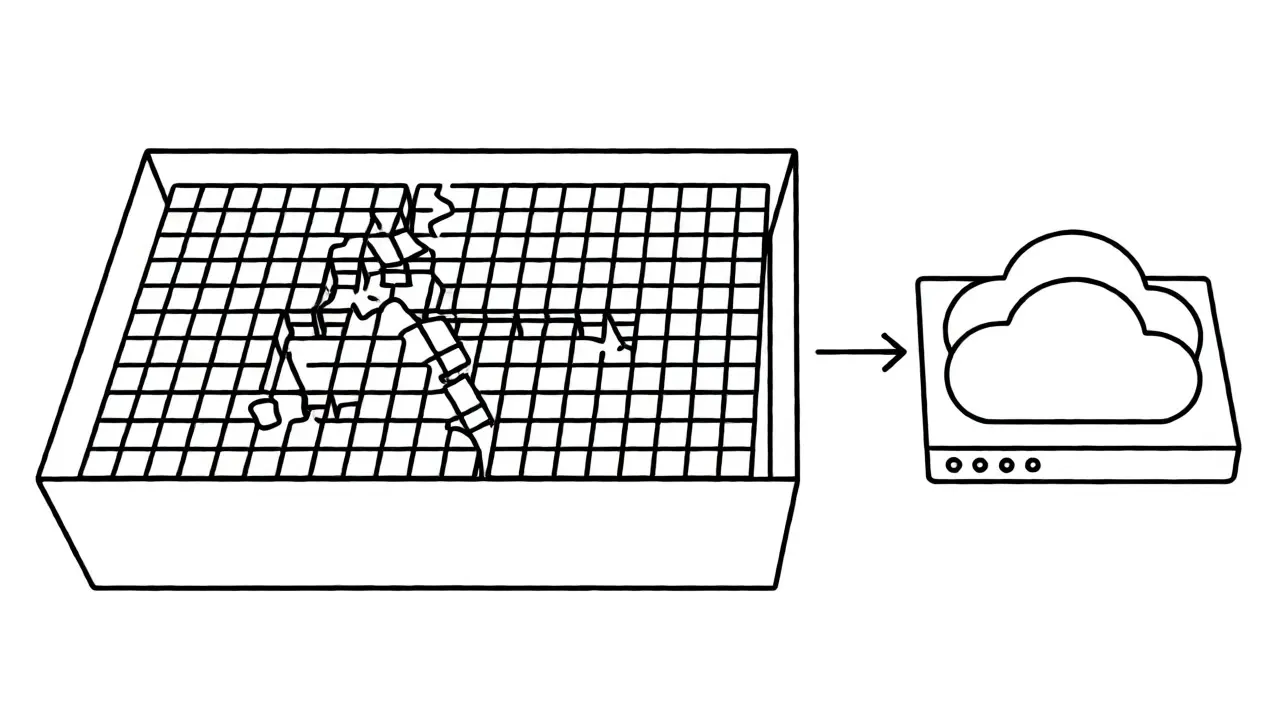
A common mistake is encrypting data before sending it to the cloud, thinking that solves the problem. While encryption protects data at rest, it doesn’t always satisfy auditors who want physical control over processing locations. A better hybrid approach keeps the raw data ingestion and initial preprocessing on-prem. Only anonymized or aggregated features get sent to the cloud for heavy lifting or model retraining.
New technologies like Confidential Computing (using AMD SEV-SNP or Intel SGX) are changing this game. These allow you to process encrypted data directly in the cloud CPU/GPU without decrypting it first. This means you can leverage cloud scale while technically keeping the data unreadable to the cloud provider. Expect this to become a standard requirement for regulated industries by 2026.
Real-World Pitfalls and How to Avoid Them
Engineers often underestimate the operational complexity of hybrid systems. Here are the top three traps we see repeatedly.
1. The Latency Trap: Developers assume network calls are free. They aren’t. Every hop between on-prem and cloud adds milliseconds. If your application makes five sequential API calls across environments, you might add 200ms of pure network overhead. Solution: Batch requests. Don’t send individual tokens; send entire conversation contexts in one go. Use caching aggressively on the on-prem side to reduce round trips.
2. Version Drift: Your model updates in the cloud registry, but your on-prem servers are still running an old version. This causes subtle bugs where outputs differ slightly between environments. Solution: Implement Git-based model registries. Treat model weights like code. Use CI/CD pipelines that force synchronized rollouts across all environments. No manual copying of files.
3. Monitoring Blind Spots: You have Prometheus for on-prem and CloudWatch for AWS. They don’t talk to each other. When performance drops, you can’t tell if it’s the GPU failing locally or the network throttling in the cloud. Solution: Use federation setups or unified observability platforms like Grafana Loki or Datadog that ingest metrics from both sources into a single view. Correlate infrastructure metrics with application-level latency logs.
Is Hybrid Right for You?
Don’t adopt hybrid just because it’s trendy. Look at your constraints. If you need absolute lowest latency (<10ms) for autonomous driving or high-frequency trading, stick to pure edge/on-prem. The network overhead of hybrid is too high.
If you are a startup with no regulatory burden and variable traffic, pure cloud is cheaper and easier. You don’t need the capital expenditure of buying GPUs.
But if you are an enterprise with strict data residency rules, steady baseline traffic, and occasional spikes, hybrid is your best bet. It’s complex to set up-expect 6-9 months for full implementation-but the long-term savings and flexibility are worth it. Start small. Keep your core data local. Burst only non-sensitive workloads to the cloud. Measure everything. Then expand.
What is the main benefit of hybrid cloud for LLMs?
The primary benefit is balancing cost and compliance. It allows organizations to keep sensitive data and baseline workloads on secure, owned infrastructure while using public cloud elasticity to handle unexpected traffic spikes, avoiding the high cost of over-provisioning on-prem hardware.
How does vLLM improve hybrid serving?
vLLM uses PagedAttention to optimize GPU memory usage, reducing waste by up to 70%. In a hybrid environment, this maximizes the throughput of expensive on-prem GPUs, allowing more concurrent requests per card and making the local tier more efficient before bursting to the cloud.
Does hybrid architecture increase latency?
It can, due to network hops between environments. However, proper design mitigates this. By routing critical, low-latency requests to on-prem resources and using dedicated high-bandwidth connections (like Direct Connect) for cloud bursts, you can maintain sub-100ms latency for user-facing applications.
What skills are needed for hybrid LLM deployment?
You need expertise in Kubernetes administration for orchestration, network engineering for low-latency optimization, and MLOps practices for model versioning. Proficiency in tools like vLLM, Docker, and monitoring stacks like Prometheus is also critical.
Is hybrid suitable for startups?
Generally, no. Startups benefit more from pure cloud due to lower upfront costs and faster iteration. Hybrid is best suited for established enterprises with significant regulatory requirements, predictable baseline traffic, and the budget for complex infrastructure management.
 Artificial Intelligence





Bonnie Watt
September 3, 2026 AT 18:49This is just another way for big tech to sell you unnecessary complexity while pretending they care about your data sovereignty.
Look, I get it. Everyone wants the cloud. But let's be real here: hybrid architectures are a nightmare to maintain and honestly? They’re mostly just buzzwords dressed up as infrastructure strategy. You think routing traffic based on 'sensitivity' is some magical solution? It’s a band-aid on a broken leg.
The article glosses over the fact that most companies don’t have the engineering talent to pull this off without burning out their entire DevOps team in six months. We tried this last year. Total disaster. The latency didn't magically disappear because we bought a Direct Connect line; it just moved from our internal network to the edge of the provider's network where nobody could monitor it properly.
And don't even get me started on the compliance angle. HIPAA doesn't care if your data is encrypted in transit if your logs are leaking PII through some obscure side-channel in your Kubernetes ingress controller. Auditors aren't impressed by your fancy orchestration tools; they want to see physical air-gapped servers or nothing at all.
Furthermore, the cost analysis provided is wildly optimistic. Who actually calculates the TCO correctly when you factor in the person-hours spent debugging version drift between on-prem and cloud environments? Nobody. That’s why these projects always go over budget. The hidden costs of synchronization alone can dwarf the savings from burst capacity.
I’m tired of reading posts that treat hybrid cloud like a silver bullet. It’s not. It’s a compromise. And compromises usually mean you get the worst of both worlds unless you have an army of engineers babysitting the stack.
So yeah, nice write-up, but it feels completely disconnected from the reality of running production systems where things break at 3 AM on a Sunday.
Elisabeth Ballet
September 4, 2026 AT 17:46Honestly, I think you're being too harsh on the architecture itself rather than the implementation failures.
Hybrid isn't meant to be easy; it's meant to be resilient. If you look at the IDC data mentioned, 85% adoption isn't accidental-it's driven by actual business needs that pure cloud or pure on-prem simply cannot meet anymore. Yes, it requires skilled engineers, but isn't that the point of enterprise-grade solutions? We aren't building hobby projects here.
The version drift issue is valid, sure, but Git-based model registries are standard practice now. If teams are still manually copying files, that's a process failure, not an architectural flaw. Blaming the hybrid model for poor CI/CD pipelines is like blaming the highway for a car crash caused by bad driving.
Regarding compliance, Confidential Computing is rapidly changing the landscape. You can't ignore that AMD SEV-SNP allows processing data in memory without decryption. This satisfies auditors who previously demanded physical control because the cloud provider literally cannot read the data during inference. That's a game-changer for regulated industries.
Also, consider the scalability aspect. During quarter-end reports, on-prem clusters buckle under pressure. Hybrid allows you to burst those specific heavy-lifting jobs to the cloud while keeping sensitive PHI local. That balance is critical for financial services and healthcare firms that need both speed and security.
Latency concerns are often overstated when dedicated connections like ExpressRoute are used properly. Sub-10ms internal latency plus predictable external latency is achievable. It's not magic, but it's engineering.
We need to stop viewing hybrid as a compromise and start seeing it as a strategic tool for balancing risk and performance. The complexity is the price of admission for having control over your own destiny while leveraging elastic resources.
If your team struggled, maybe the problem was the lack of proper observability integration, which the post explicitly addresses with Grafana Loki or Datadog federation. Don't throw the baby out with the bathwater because the plumbing was tricky to install initially.
Brenna Gonedrman
September 5, 2026 AT 04:00OMG YES! FINALLY someone said it!!!
Everyone acts like hybrid is this shiny new toy, but IT IS ACTUALLY THE ONLY WAY TO SURVIVE IN 2026!
I am literally shaking right now because people STILL think you can just put everything in AWS and call it a day. NO. ABSOLUTELY NOT.
Do you know what happens when GDPR fines hit? Your company DIES. Gone. Poof.
On-prem keeps the scary legal stuff safe, and cloud handles the crazy spikes. It is SO simple yet everyone makes it complicated.
vLLM is basically magic for GPU memory. Like, seriously, 70% less waste? That is insane efficiency.
If you are using old frameworks, you are throwing money away. Period.
Stop listening to people who say 'just use the cloud.' They don't understand data residency laws!
They don't understand egress fees eating their lunch!
Hybrid is the king. Long live the king.
Get your ducks in a row before the next regulatory wave crashes down!
Courtney Wagstaff
September 5, 2026 AT 06:33Love the vibe of this discussion, really digging into the nitty-gritty of how we juggle bits and bytes across different realms.
It’s like trying to dance a tango where one partner is in your basement and the other is floating in the stratosphere. You gotta keep the rhythm tight or you step on toes.
The idea of 'cloud bursting' feels so organic, like a tree growing branches only when the sun hits them. On-prem is the roots, deep and dark, holding the precious secrets close. Cloud is the leaves, catching the light and expanding when needed.
But oh, the networking... that silent killer indeed. It’s the invisible thread that holds the whole tapestry together. If that thread snaps, the whole picture unravels into chaos.
I remember watching my first Kubernetes cluster try to sync state between edge nodes and the cloud. It felt like herding cats made of lightning. Beautiful, terrifying, and utterly unpredictable.
The mention of RDMA networking gave me chills. 100Gbps? That’s not just fast; that’s teleportation for data packets. No more waiting around for bits to crawl across the wire.
Compliance folks are the strict librarians of this library, shushing anyone who tries to check out a book without stamping it first. But hey, rules are rules, especially when health records are involved.
Still, there’s something poetic about letting the sensitive data stay home while sending the anonymous ghosts to wander the public cloud. A digital exile for the sake of freedom.
Just hope the monitoring tools play nice together. Nothing worse than two eyes looking at the same patient and disagreeing on whether they’re alive or dead.
Anyway, keep dancing, keep syncing, and may your latencies remain low and your bills remain reasonable. 🌿✨
Joanna Mucha
September 6, 2026 AT 13:50One must pause and contemplate the ontological implications of splitting consciousness-or in this case, computation-across disparate physical substrates.
We speak of 'hybrid' as if it were a mere technical configuration, yet it represents a fundamental schism in the nature of digital existence. To fragment the mind of the LLM across private iron and public ether is to invite a duality that threatens the coherence of the self.
The author posits that this fragmentation optimizes cost and security, but does it not also introduce a profound existential anxiety into the system? When the request traverses the boundary between the known (on-prem) and the unknown (cloud), is there not a moment of hesitation, a gap in certainty?
Consider the concept of 'version drift.' It is not merely a bug; it is a temporal dissonance. The model exists in two times simultaneously, its past in the registry and its present in the execution environment. This paradox haunts the outputs, creating subtle divergences that no amount of CI/CD can fully exorcise.
Moreover, the reliance on 'Confidential Computing' suggests a distrust of the very medium we inhabit. We seek to encrypt the thought itself, hiding it from the host, as if the hardware were a predatory entity awaiting consumption. This paranoia shapes our architecture more than any performance metric.
The 'latency trap' is metaphorical as much as it is technical. Every millisecond added is a delay in response, a widening of the void between intention and action. In high-frequency trading, this void is death. In chatbots, it is awkwardness. But in the grand scheme, it is the friction of existence.
Are we truly serving users, or are we merely managing the entropy of distributed systems? The 'best strategy' may simply be the one that delays collapse the longest.
Let us not mistake complexity for sophistication. Sometimes, the simplest path is the most honest. Yet, we build labyrinths of orchestration and call it progress.
Kim Edwards
September 7, 2026 AT 23:22OH MY GOD, THIS POST IS GIVING ME ANXIETY ATTACKS JUST READING IT!!! 😱😱😱
I was sitting here thinking, 'Hey, maybe I'll just stick to Azure,' and then BAM! 💥 You hit me with the egress fees surprise! My wallet literally screamed in pain hearing about terabytes moving out of the cloud!
And the latency part? DO YOU KNOW HOW MUCH I HATE WAITING? 15-40ms feels like FOREVER when you're trying to talk to a bot! It's like talking to someone with a slight audio delay on Zoom but ten times worse! 😫
Then you drop the $1.2-1.8 million annual cost for on-prem GPUs?! I nearly fell off my chair! 💸 That's enough money to buy a small island! Or at least a really nice vacation!
But wait... the hybrid solution saves the day? Kinda? It sounds so complicated though. Kubernetes? RDMA? Direct Connect? It's like learning a new language just to run a chatbot! 🤯
I'm stressed just imagining the DevOps team trying to debug version drift at 2 AM. Poor souls! They probably haven't slept since 2024! 😴
Is it worth it? Is it REALLY worth it? The uncertainty is killing me! 😩
Anyway, thanks for the reminder that nothing is ever simple in tech land! 🎢
tiffany King
September 9, 2026 AT 07:52This is such a helpful breakdown! It really clarifies why so many companies are moving toward hybrid setups instead of sticking to one extreme.
I particularly appreciated the emphasis on starting small. It’s easy to feel overwhelmed by the complexity of orchestrating across multiple environments, but taking it step-by-step seems like the most sustainable approach.
The point about batching requests to reduce latency overhead is super practical advice that engineers can implement immediately. It’s great to see concrete solutions alongside the theoretical benefits.
Also, highlighting the role of vLLM in maximizing on-prem GPU efficiency is key. Many people overlook software optimization when focusing solely on hardware scaling.
Thanks for sharing these insights-it gives me more confidence in exploring hybrid strategies for our upcoming projects!