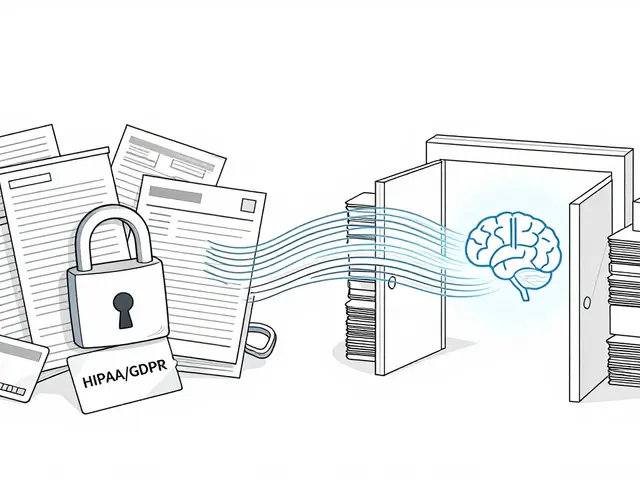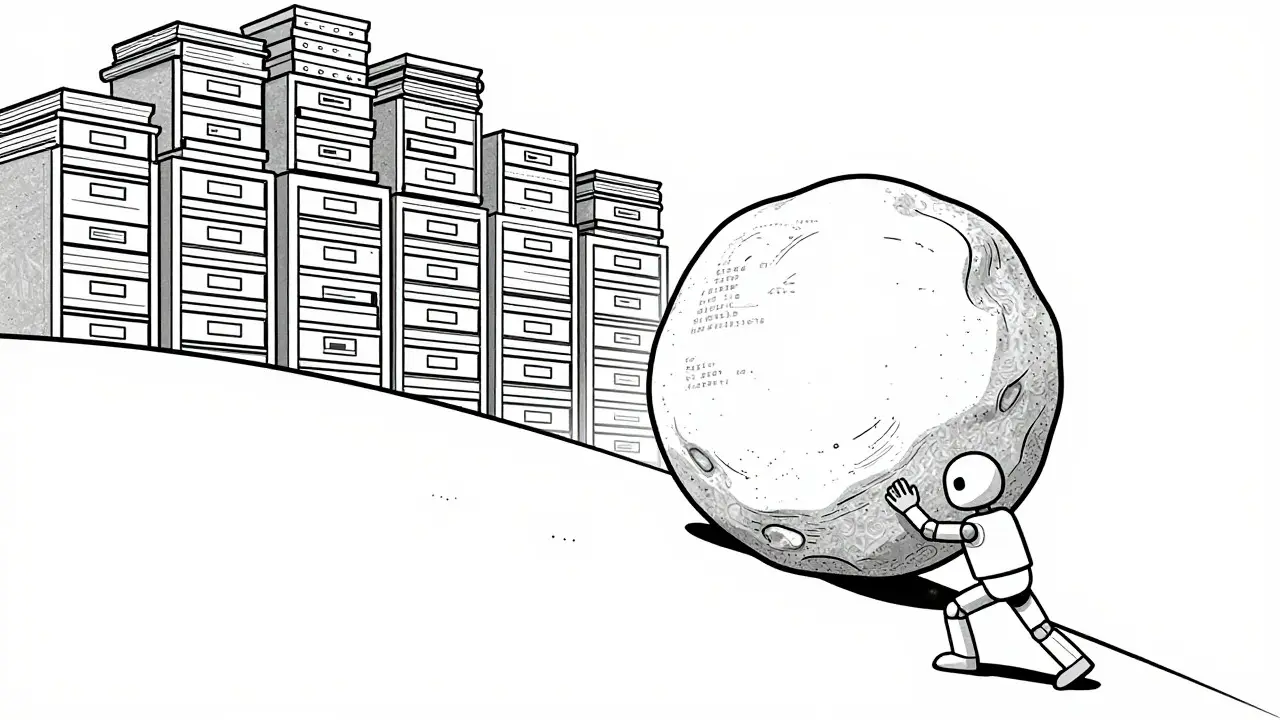
Remember when asking an AI to summarize a 50-page document felt like pushing a boulder up a hill? The model would either forget the beginning by the time it reached the end, or it would take forever to process the text. That frustration is fading fast. In 2026, we are witnessing a fundamental shift in how artificial intelligence handles information. It’s no longer just about generating words; it’s about remembering them.
We have moved past the era of simple prompts. We are now in the context era. The big players-NVIDIA, Google, and specialized infrastructure firms-are solving the "context wall" problem that has plagued large language models (LLMs) since their inception. This means AI can now maintain persistent state across interactions, recall specific details from millions of tokens, and act with a level of continuity that feels almost human. If you are building or using AI systems today, understanding this shift isn't optional-it's essential.
The Context Wall: Why Traditional AI Forgot Things
To understand why 2026 is such a big deal, you have to look back at where we started. When Vaswani et al. published "Attention Is All You Need" in 2017, they introduced the transformer architecture. It was revolutionary. But it had a fatal flaw for long documents: computational cost grew linearly with context length.
In traditional transformers, processing the 10-millionth token took one million times longer than processing the 10th token. Imagine reading a book where every page takes twice as long to read as the last one. By the time you reach the middle, you’re stuck. This latency, combined with massive memory constraints, created a "context wall." Models could technically handle more data, but the speed and cost made it impractical. You couldn’t feed a legal contract, a year’s worth of customer logs, or a complex codebase into a single session without hitting a wall.
This limitation forced developers to use workarounds like Retrieval-Augmented Generation (RAG), which chunks data and retrieves only relevant parts. While useful, RAG often missed nuances that required understanding the full narrative flow. The dream was always an AI that could hold the entire picture in its head at once.
NVIDIA’s Breakthrough: Test-Time Training End-to-End
Enter NVIDIA’s February 2026 announcement of TTT-E2E (Test-Time Training End-to-End). This approach flips the script on how models handle input. Instead of treating the context window as static data to be attended to, TTT-E2E treats the input as training data during inference itself.
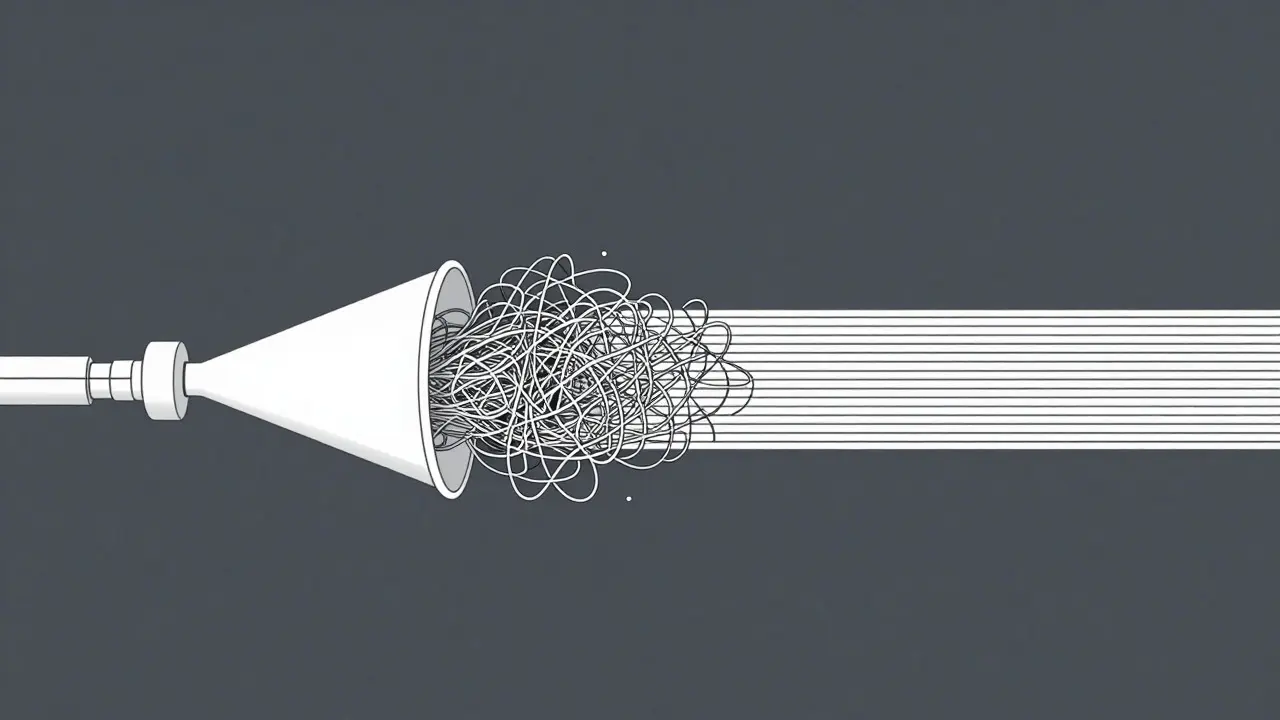
Think of it like learning a new language while listening to a conversation. As the AI processes the text, it compresses the context on the fly. This compression allows it to achieve constant latency regardless of how long the context is. According to NVIDIA’s benchmarks on H100 GPUs, TTT-E2E is 2.7x faster than full attention for 128K contexts and a staggering 35x faster for 2M contexts.
What makes this impressive is that it doesn’t sacrifice accuracy. Previous methods, like Recurrent Neural Networks (RNNs) such as Mamba 2, scaled well in speed but suffered from high loss (forgetting important details). Full attention scaled well in accuracy but died in speed. TTT-E2E is the first method to show favorable scaling in both metrics simultaneously. For a developer, this means you can feed a 2-million-token document into a model and get a response in seconds, not hours.
Google’s Approach: Titans and the Power of Surprise
While NVIDIA focuses on compression, Google Research is betting on selective memory. Their January 2026 release of the Titans architecture introduces a novel neural long-term memory module. Unlike traditional RNNs that use fixed-size vectors, Titans uses a multi-layer perceptron (MLP) for memory storage. This gives it significantly higher expressive power.
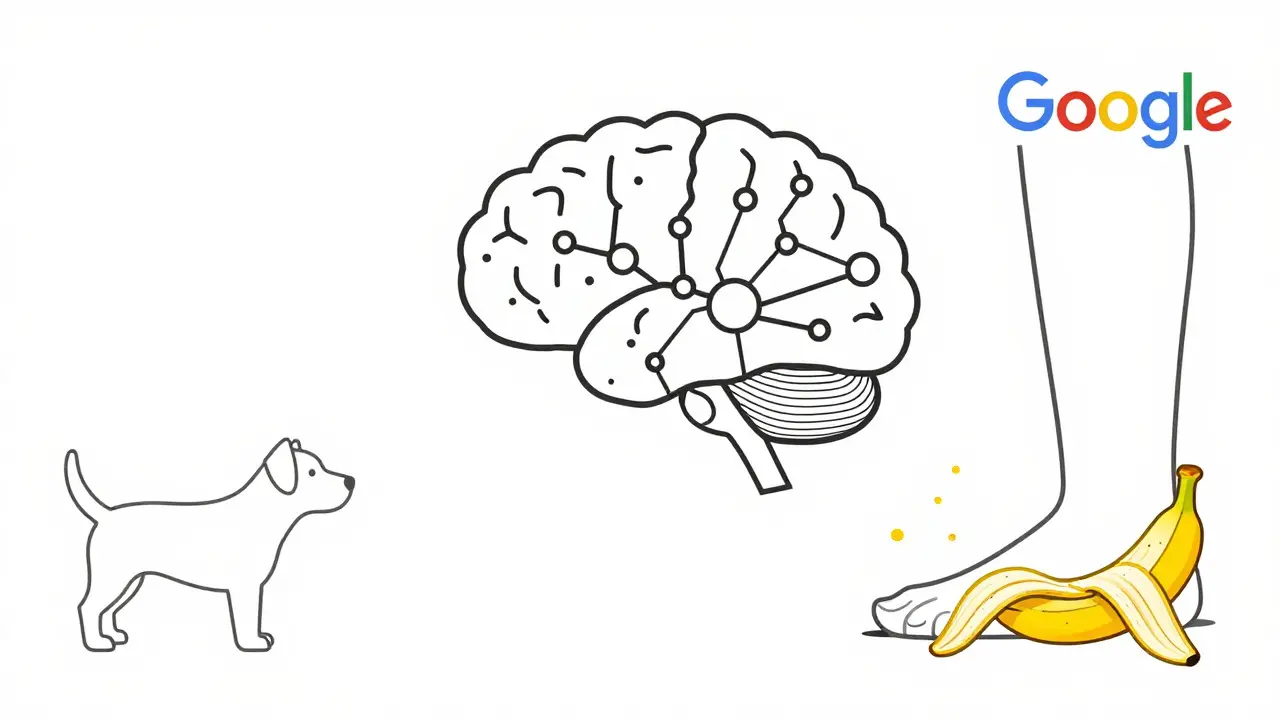
The secret sauce here is a mechanism called "surprise." The system calculates gradients to determine what deserves to be stored. If the input is predictable-like seeing the word "dog" after a sentence about pets-the model assigns it low priority. It doesn’t waste precious memory on expected information. But if something unexpected happens-say, an image of a banana peel appears in a financial report-that high-surprise signal triggers permanent storage in the long-term memory.
This mimics how human memory works. You don’t remember every step you took yesterday, but you remember the time you slipped on a banana peel. Google demonstrated that Titans could scale to context windows exceeding 2 million tokens while outperforming larger models like GPT-4 on the BABILong benchmark, which tests reasoning across extremely long documents. With fewer parameters, Titans achieved better recall because it knew exactly what was important to keep.
Infrastructure: The New Bottleneck
Software innovations mean nothing if the hardware can’t keep up. WEKA’s analysis in early 2026 highlighted that inference didn’t hit a compute wall; it hit a context memory wall. The bottleneck is no longer just GPU calculation speed; it’s how fast you can move data in and out of memory.
NVIDIA addressed this at CES 2026 by unveiling an Inference Context Memory Storage Platform powered by BlueField-4 data processors. This setup treats context as a first-class resource. It uses RDMA-connected, NVMe-backed fabric with GPUDirect Storage to extend GPU memory capacity. Think of it as giving your GPU a direct highway to ultra-fast storage, bypassing the congested city streets of traditional CPU-RAM transfers.
For enterprise deployments, this means new infrastructure requirements. You need minimum 400GB/s interconnect speeds for context sharing and storage tiers optimized for Key-Value (KV) cache patterns. Companies like WEKA, Redis, and MemVerge are capturing this opportunity, with WEKA reporting 300% year-over-year growth in context storage solutions. If you are planning an AI deployment in 2026, your storage architecture is just as important as your model choice.
| Architecture | Key Mechanism | Latency Scaling | Recall Accuracy | Best Use Case |
|---|---|---|---|---|
| Full Attention (Traditional) | Attends to all tokens | Poor (O(n) complexity) | High | Short to medium contexts (<128K) |
| Mamba 2 / RNNs | Recurrent processing | Good (Constant) | Low (High loss beyond 128K) | Streaming data with loose accuracy needs |
| TTT-E2E (NVIDIA) | Test-time compression | Excellent (Constant) | High | Massive documents requiring full retention |
| Titans (Google) | Surprise-based memory | Good | Very High (Selective) | Agentic tasks requiring critical detail recall |
The Human Element: Bias and Implementation Challenges
It’s not all smooth sailing. VirtusLab documented a phenomenon called "beginning-end bias" in February 2026. Even with advanced architectures, LLMs tend to recall the start and end of extremely long contexts better than the middle. If you have a 200K-token technical document, the AI might miss crucial details in chapter 10 while nailing the introduction and conclusion. Engineers are spending 15-20% of implementation time calibrating surprise thresholds in Titans or tuning compression in TTT-E2E to mitigate this.
User feedback from production environments highlights real-world friction. On Reddit’s r/MachineLearning, an engineer noted that Titans reduced document processing latency by 83% for 500K-token legal contracts. However, another user complained about missing middle-section details in technical docs. This tells us that while the technology is powerful, it requires careful monitoring. You can’t just set it and forget it.
Furthermore, the learning curve is steep. Experienced ML engineers need 3-6 weeks to master these context-optimized architectures. It’s no longer enough to know prompt engineering. Teams need expertise in distributed memory management, context lifecycle management, and governance. Sphere Partners notes that "context-first architecture" will turn pilots into production value in 2026-2027, but only if teams develop these new skills.
Enterprise Adoption: Who Is Leading?
Who is actually using this stuff? Legal and healthcare sectors are leading the charge, with 78% and 65% enterprise usage respectively for long-context applications. These industries deal with massive amounts of unstructured text where nuance matters. A missed clause in a contract or a symptom in a patient history can be costly.
Manufacturing lags behind at 32%, largely due to challenges in integrating sensor data with text-based models. However, the trend is clear. Okoone’s survey of 200 enterprise AI deployments revealed that 67% of organizations now prioritize "long-context memory capabilities" when selecting platforms, up from just 22% in late 2025. G2 Crowd data shows context management features influence 42% of purchasing decisions.
Enterprise solutions like Hindsight, A-MEM, and LangMem are gaining traction for managing long-term recall across months of operation. These tools specialize in persistent state, allowing agents to remember decisions made weeks ago. This is the foundation of true agentic AI-systems that don’t just answer questions but execute complex workflows over time.
What Comes Next?
Looking ahead, the trajectory is aggressive. NVIDIA plans to integrate TTT-E2E into all future GPU architectures starting with Blackwell Ultra in Q3 2026. Google is releasing Titans 2.0 in June 2026 with cross-agent memory sharing. Forrester predicts context windows will exceed 10 million tokens by 2027.
But researchers remain cautious. NVIDIA warns that scaling trends require continuous validation beyond 2M tokens. Google admits that surprise mechanisms are sensitive to domain-specific expectations. The consensus is that solving long-context memory is the essential foundation for practical agentic AI. As WEKA’s CTO put it, "The AI industry has moved from the Prompt Era to the Context Era."
If you are building AI applications, ask yourself: Does my system remember? Can it learn from the whole story, not just the last few sentences? The answers to those questions will define your success in 2026 and beyond.
What is the difference between TTT-E2E and Titans architecture?
TTT-E2E (NVIDIA) focuses on compressing context during inference to maintain constant latency and high accuracy across millions of tokens. Titans (Google) uses a "surprise" mechanism to selectively store only unexpected or critical information in a neural long-term memory module, optimizing for expressive power and recall of key details rather than uniform compression.
Why is 2026 considered a turning point for long-context AI?
2026 marks the release of breakthrough architectures like TTT-E2E and Titans that solve the "context wall" problem. These models can handle 2M+ token contexts with practical latency and high accuracy, moving beyond the limitations of traditional transformers and approximate attention methods that struggled with speed or recall.
What is "beginning-end bias" in long-context models?
Beginning-end bias is a phenomenon where LLMs tend to recall information from the start and end of very long documents more accurately than the middle sections. This can lead to missed details in lengthy technical or legal documents, requiring engineers to tune models to mitigate the issue.
How does infrastructure impact long-context AI performance?
Performance is limited by memory bandwidth, not just compute power. Solutions like NVIDIA’s BlueField-4 DPUs and WEKA’s NVMe-backed fabrics provide high-speed interconnects (400GB/s+) to manage KV caches efficiently. Without this infrastructure, GPUs stall waiting for data, negating the benefits of advanced algorithms.
Which industries are adopting long-context AI fastest?
Legal and healthcare are leading adoption rates at 78% and 65% respectively, due to their reliance on analyzing massive amounts of unstructured text where nuance and complete context are critical. Manufacturing lags at 32% due to integration challenges with sensor data.
 Artificial Intelligence