You’ve probably heard the term "vibe coding" floating around tech Twitter and LinkedIn lately. It sounds like something out of a sci-fi movie-where you just tell an AI what you want, it writes the code, and you ship it without looking at a single line. For many developers, that idea triggers immediate panic. But for enterprise leaders stuck in the backlog of boring, repetitive back-office tasks, it might actually be the breakthrough they’ve been waiting for.
Here’s the reality: most companies aren’t trying to build the next Facebook using vibe coding. They’re trying to fix a broken spreadsheet workflow, automate a compliance check, or generate documentation that nobody wants to write manually. These are low-risk use cases where speed matters more than perfect architectural elegance. If you’re wondering whether your organization can safely adopt this approach without burning down production, let’s break down exactly where vibe coding fits in the enterprise back office-and where it absolutely doesn’t.
What Is Vibe Coding (And Why It’s Not Just Copilot)
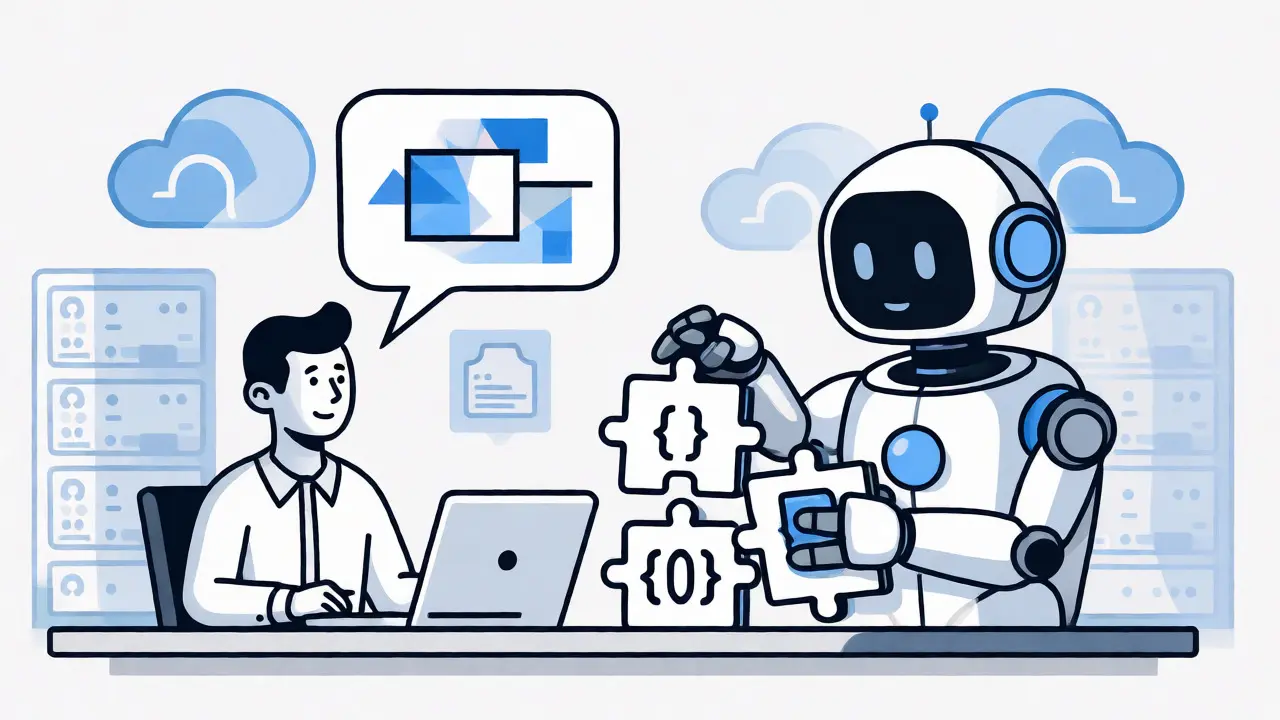
To understand the risk profile, you first need to distinguish vibe coding from standard AI-assisted programming. Tools like GitHub Copilot act as autocomplete on steroids; they suggest lines, but you still own every character. Vibe coding is different. Platforms like Claude Code, Cursor, and Windsurf function more like junior pair programmers. You give them a high-level goal, and they plan the work, create multiple files, run commands, read errors, and propose pull requests.
The key difference? In vibe coding, the human often skips the deep code review phase during the initial generation. The AI handles the end-to-end workload. This lowers the barrier to entry significantly-you don’t need to be a senior engineer to start-but it shifts the responsibility. Instead of reviewing syntax, you’re reviewing logic, constraints, and integration points. For back-office functions, this shift is manageable because the stakes are usually internal and contained.
Automating Internal Workflows Without IT Bottlenecks
The biggest pain point in any large company isn’t the core product; it’s the messy middle. We’re talking about manual data entry between CRM and ERP systems, generating weekly sales reports from raw CSVs, or building small dashboards for HR teams. Traditionally, these requests sit in an IT queue for weeks because they’re "too small" for a full dev sprint but "too complex" for Excel macros.
Vibe coding shines here. Business analysts can describe a workflow in plain English: "Take this CSV of employee expenses, flag anything over $500, and email it to the manager." An AI agent generates a Python script, tests it against sample data, and packages it as a simple web app or cron job. Because these tools are internal, if the script fails, it doesn’t crash the customer-facing website. It just means someone has to re-run it. That tolerance for failure makes it a prime candidate for vibe coding.
- Rapid Prototyping: Build a working prototype in hours instead of weeks to validate if a process is even worth automating.
- Custom Toolkits: Let non-technical staff tweak existing internal tools by asking the AI to modify filters or add columns.
- Data Consolidation: Merge disparate databases into a single view for ad-hoc analysis without waiting for a data warehouse update.
Streamlining Documentation and Knowledge Management
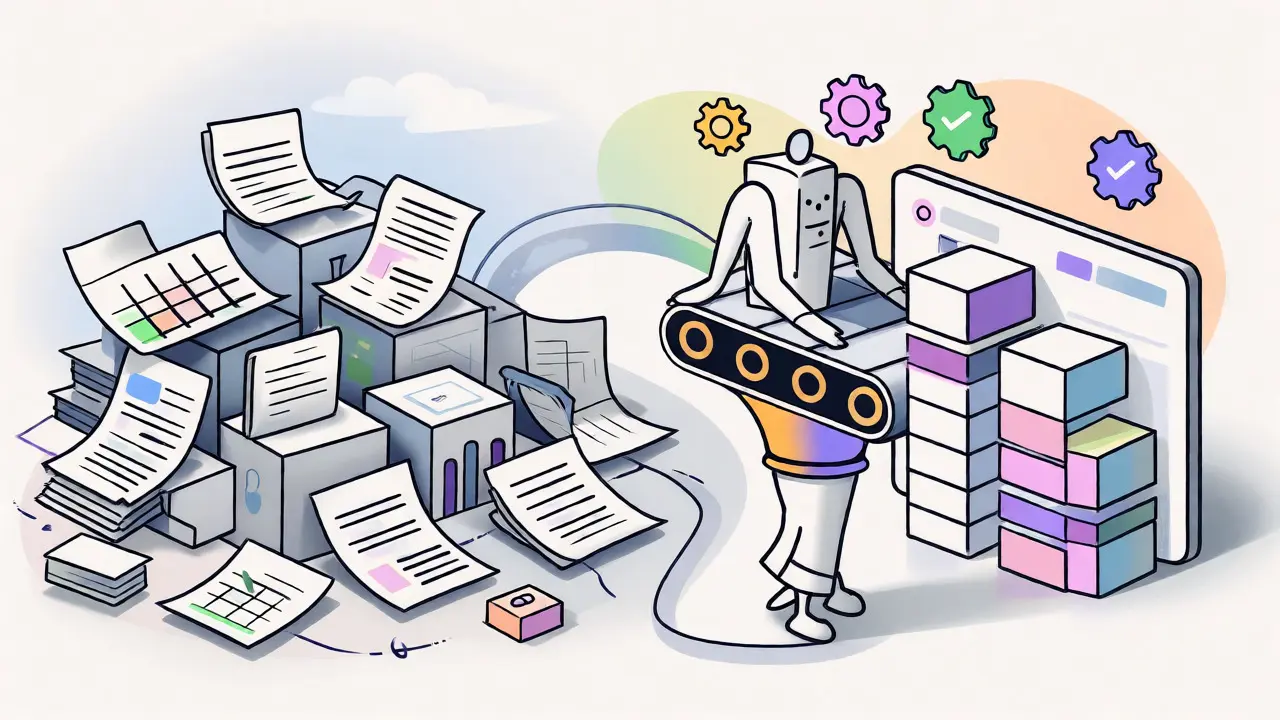
Nobody likes writing documentation. Engineers hate it, managers skip it, and six months later, no one knows how a specific deployment script works. Vibe coding offers a clever workaround: generate docs as you go. Since AI agents have context on the codebase history and recent changes, they can automatically draft deployment guides, changelogs, or inline comments.
Consider a scenario where a DevOps team updates their infrastructure configuration. Instead of manually updating the wiki, they prompt the AI: "Summarize the changes made to the Terraform files in the last two weeks and update the README." The AI scans the git history, identifies the modifications, and drafts a clear explanation. Is it perfect? No. AI-generated text can sometimes be vague or hallucinate details. But it’s far better than starting from a blank page. A quick human edit turns a rough draft into accurate documentation, saving hours per week across the engineering org.
| Feature | Vibe Coding Approach | Traditional Development |
|---|---|---|
| Time to MVP | Hours to Days | Weeks to Months |
| Primary User | Business Analyst / Junior Dev | Senior Engineer |
| Code Review Depth | Logic & Output Validation | Syntax, Security, Architecture |
| Risk Level | Low (Internal/Non-Critical) | High (Production/Customer-Facing) |
| Cost Structure | Tooling + Token Usage | FTE Salary + Overhead |
Compliance and Monitoring Scripts
Security and compliance teams drown in repetitive checks. Are all S3 buckets encrypted? Do our IAM policies follow least privilege? Writing scripts to answer these questions is tedious but critical. Vibe coding allows security engineers to draft these monitoring scripts quickly. You can ask an AI to "Write a Python script that checks AWS CloudTrail logs for unauthorized root access attempts in the last 24 hours."
This works well because the output is deterministic and testable. You run the script, see if it flags the right incidents, and verify the logic. However, there’s a trap: AI might suggest superficial checks rather than deep validation. It might check if a bucket exists but miss whether its policy explicitly denies public access. Therefore, treat AI-generated compliance scripts as first drafts. Always layer them with robust scanning tools and peer review before trusting them for audit trails.
Another emerging area is Policy-as-Code. Frameworks like Open Policy Agent (OPA) allow you to define rules in code. Learning the syntax can be steep. Vibe coding helps bridge that gap. Developers can describe a rule in natural language-"Deny deployments if the environment tag is missing"-and have the AI generate the Rego policy. Again, human oversight ensures the policy covers edge cases, but the barrier to entry drops dramatically.
Risk Mitigation: How to Keep It Safe
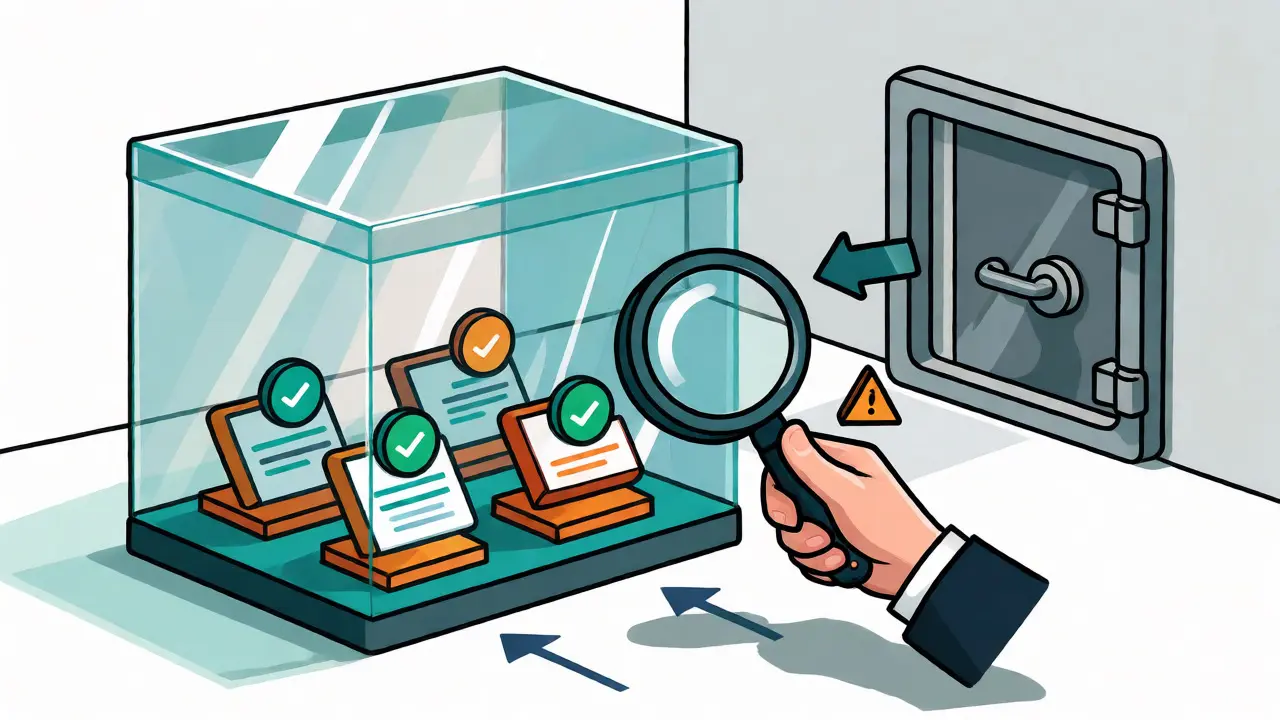
Just because it’s low-risk doesn’t mean it’s risk-free. Unmanaged vibe coding can amplify supply chain risks. If an AI suggests a library with a known vulnerability, and you don’t review the dependencies, you inherit that problem. To mitigate this, enterprises need guardrails.
First, enforce secure-by-design backends. Run models locally or in private clouds if data sensitivity is high. Second, restrict agent permissions. Don’t let the AI agent have write access to your entire file system or production database unless necessary. Third, track token usage. Tools like Langfuse or OpenTelemetry can help monitor costs, preventing runaway API bills from infinite loops or verbose prompts.
Finally, establish a "sandbox" culture. Start with experimental, disposable prototypes. If a vibe-coded tool breaks, you should be able to delete it and rebuild it in an hour without impacting business continuity. Once you trust the process, you can gradually expand to more stable internal systems.
When to Avoid Vibe Coding
Know your limits. Vibe coding is not suitable for financial transaction ledgers, customer-facing checkout flows, or security-critical authentication modules. These areas require rigorous testing, formal verification, and deep architectural understanding. If a bug in the code causes a regulatory fine or a lost customer, you need a human engineer owning every line. Save vibe coding for the things that annoy your employees but won’t kill your business if they glitch.
Is vibe coding only for non-developers?
No. While it lowers the barrier for beginners, senior engineers use vibe coding to accelerate boilerplate creation, refactoring, and prototyping. The value lies in speed and iteration, not just accessibility.
How do we handle security risks with AI-generated code?
Implement automated dependency scanning and static analysis tools in your CI/CD pipeline. Treat AI-generated code like code from a new intern: it needs review, testing, and adherence to security standards before merging.
Can vibe coding replace traditional software development teams?
Not entirely. It complements them by handling routine tasks and rapid prototyping. Complex system architecture, strategic technical decisions, and high-stakes production reliability still require experienced human oversight.
What tools are best for enterprise vibe coding?
Popular options include Cursor, Windsurf, and Claude Code. Enterprises often prefer solutions that offer private cloud deployment or local model execution to keep proprietary code and data within their security perimeter.
How much does vibe coding cost compared to hiring a developer?
As of late 2025, a complete setup including AI tools and monitoring often costs a fraction of a single Full-Time Equivalent (FTE). However, costs scale with usage and complexity, so budget for token consumption and potential integration support.
 Artificial Intelligence