For years, supply chain managers have treated forecasting as a quarterly ritual. You pull historical data, run it through Excel or legacy software, and hope the future looks like the past. But in a world where geopolitical shifts, weather anomalies, and social media trends can derail production schedules overnight, that approach is costing you money. The real question isn't just whether generative AI works for supply chains-it’s how quickly it pays for itself by fixing two critical metrics: forecast accuracy and inventory turns.
The Core Problem: Static Forecasts vs. Dynamic Reality
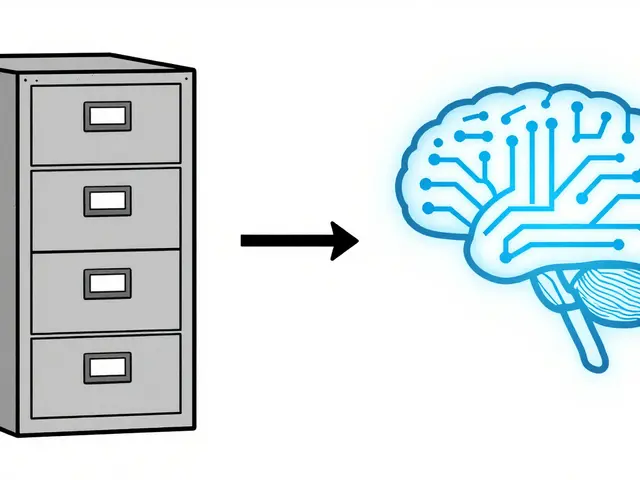
Traditional statistical models like ARIMA or exponential smoothing rely heavily on historical patterns. They assume stability. When markets are stable, these methods work fine. But when volatility hits, they fail. A major electronics manufacturer found this out the hard way before switching to generative AI solutions. Their old system couldn’t account for sudden spikes in component demand driven by viral product launches or unexpected port closures.
Generative AI changes the game because it doesn’t just analyze what happened; it simulates what *could* happen. By ingesting over 50 variables-including social sentiment, weather forecasts, and geopolitical news-these systems create probabilistic demand scenarios in real time. According to Glean’s 2024 analysis, manufacturers using this technology saw a 15-30% improvement in forecast accuracy compared to traditional methods. That’s not a marginal gain; it’s a structural advantage.
How Generative AI Improves Forecast Accuracy
Forecast accuracy is the foundation of efficient inventory management. If you guess wrong, you either hold too much stock (tying up cash) or too little (losing sales). Generative AI addresses this by leveraging Retrieval Augmented Generation (RAG) architectures. This means large language models (LLMs) connect directly to your enterprise resource planning (ERP) systems like SAP or Oracle, pulling live data rather than relying on stale snapshots.
- Natural Language Interfaces: Planners can ask questions like, “What happens to our Q3 inventory if a hurricane hits the Gulf Coast?” instead of running complex simulations manually. BCG reports this increases user adoption by 60%.
- Sparse Data Handling: Unlike machine learning models that struggle with new products, generative AI performs 15-20% better with sparse data, making it ideal for new product introductions.
- Real-Time Adjustment: Systems process supply chain data 30% faster than traditional analytics platforms, allowing for continuous recalibration rather than periodic updates.
Lenovo’s implementation demonstrates this clearly. Their AI-based demand sensing platform delivered a 25% improvement in forecast accuracy and a 20% reduction in surplus inventory. For a global hardware company, that translates to millions in freed-up working capital.
Inventory Turns: Turning Stock into Cash
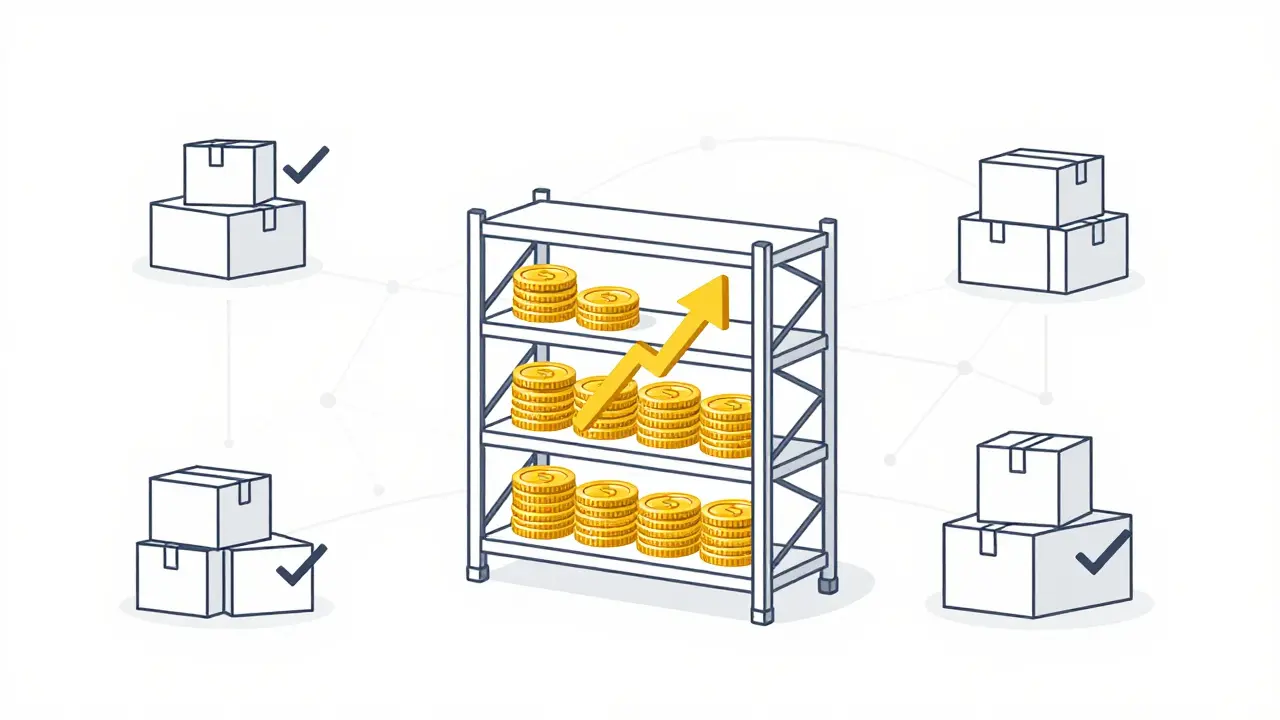
Inventory turns measure how many times you sell and replace your inventory in a given period. Higher turns mean less capital sitting on shelves and lower carrying costs. Generative AI optimizes this by simulating thousands of stocking scenarios instantly. Instead of guessing safety stock levels, planners see the financial impact of different strategies.
| Metric | Traditional Methods | With Generative AI | Source |
|---|---|---|---|
| Forecast Accuracy Improvement | Baseline | +15-30% | Glean, 2024 |
| Inventory Cost Reduction | Variable | -20-25% | SmartDev, 2024 |
| Process Cycle Time | Standard | -30-50% | BCG, 2024 |
| User Adoption Rate | Low-Medium | +60% | BCG, 2024 |
A major electronics manufacturer documented in Glean’s case study achieved a 25% reduction in inventory costs. How? By reducing excess stock without sacrificing service levels. The AI identified slow-moving SKUs earlier and adjusted procurement orders dynamically. This isn’t just about saving storage space; it’s about liquidity. Every dollar tied up in unnecessary inventory is a dollar not invested in growth.
Calculating Your ROI: Beyond the Hype
ROI calculations for generative AI must be grounded in tangible outcomes. KPMG’s 2023 report notes that enterprise deployments average $500,000 to $2 million. That’s a significant investment. However, the returns can be substantial. Microsoft’s Dynamics 365 Supply Chain Management implementation showed a 90% ROI over three years, primarily through reduced machine downtime and optimized logistics.
To calculate your potential ROI, consider these factors:
- Carrying Cost Savings: Reduce inventory holding costs by 20-25%. If your annual carrying cost is 20% of inventory value, a $10M inventory portfolio saves $2M-$2.5M annually.
- Labor Efficiency: Automation reduces manual planning time by 30-50%. Planners shift from data entry to strategic decision-making.
- Stockout Prevention: Improved accuracy prevents lost sales. Even a 1% increase in fill rate can significantly boost revenue for high-volume businesses.
Glean’s 2024 analysis reveals that 78% of manufacturing executives report measurable returns, with strategic implementations yielding 200-400% ROI. The key is linking AI outputs directly to financial metrics. Don’t just track “accuracy”; track how accuracy impacts cash flow.
Implementation Challenges and Pitfalls
Despite the promise, implementation is rarely smooth. Lumenalta’s 2024 analysis warns that poor data quality can reduce forecast accuracy improvements by 60-70%. If your ERP data is messy, fragmented, or outdated, generative AI will amplify those errors. Data cleansing alone can take 3-4 months, accounting for 70% of successful project timelines according to Dataiku.
Other common hurdles include:
- Integration Delays: Legacy systems cause 45% of implementation delays. Ensure your IT team has a clear roadmap for connecting AI tools with existing infrastructure.
- Trust Issues: 35% of organizations struggle with explainability. Planners won’t act on recommendations they don’t understand. Choose vendors that provide transparent reasoning behind AI suggestions.
- Change Management: 55% of organizations face resistance from staff accustomed to traditional methods. Training and involvement are critical. Assign dedicated supply chain planners to the implementation team-they know the nuances of your business.
Dr. James Wilson of Dataiku emphasizes that prompt engineering is crucial. Without careful guidance, LLMs can “hallucinate” incorrect supply chain decisions. Establish strict validation protocols before deploying AI-driven actions automatically.

Future Trends: Digital Twins and Hybrid Models
The next evolution involves digital twins. Gartner predicts 60% of large enterprises will use AI-powered digital twins of their supply chains by 2026. These virtual replicas allow for risk-free simulation of disruptions. Imagine testing how a supplier bankruptcy affects your entire network before it happens.
Hybrid human-AI collaboration is also gaining traction. BCG documents cases where planners using GenAI tools achieved 2-percentage-point EBITDA increases within two years. The AI handles data processing and scenario generation; humans apply judgment and context. This balance maximizes efficiency while maintaining control.
Regulatory considerations are emerging too. The EU AI Act requires transparency in AI-driven decisions affecting critical infrastructure. Compliance may add 10-15% to implementation costs, but it ensures long-term viability. Companies ignoring these rules risk fines and reputational damage.
Next Steps for Decision Makers
If you’re considering generative AI for your supply chain, start small. Pilot one function-like demand sensing for a specific product line-before scaling. Measure success against clear KPIs: forecast error rates, inventory turnover ratios, and carrying costs. Avoid the trap of buying technology without a plan for integration and training.
Engage your IT and supply chain teams early. Define data requirements clearly. Partner with vendors who offer robust support and transparent algorithms. Remember, the goal isn’t just to adopt AI; it’s to improve your bottom line. With proper execution, generative AI transforms supply chain planning from a reactive chore into a proactive competitive advantage.
How long does it take to see ROI from generative AI in supply chain?
Most organizations begin seeing measurable returns within 6-12 months after deployment. Initial gains come from reduced manual labor and improved forecast accuracy. Full ROI, often exceeding 200%, typically materializes over 2-3 years as the system learns and optimizes further. Early wins depend heavily on data quality and user adoption.
Is generative AI better than traditional machine learning for forecasting?
In volatile markets, yes. Generative AI handles sparse data and unpredictable variables better, offering 15-20% superior performance for new products. However, in highly stable environments with consistent historical patterns, traditional ML models may perform equally well at lower computational cost. Use generative AI when complexity and change are high.
What are the biggest risks of implementing generative AI in supply chain?
The primary risks are poor data quality, lack of explainability, and integration challenges. Bad data leads to bad predictions. Unexplainable AI erodes planner trust. Legacy system incompatibility causes delays. Mitigate these by investing in data cleansing, choosing transparent vendors, and involving IT early in the planning phase.
How much does a typical generative AI supply chain implementation cost?
Enterprise deployments range from $500,000 to $2 million, depending on scope and customization needs. Mid-market solutions are cheaper but may lack advanced features. Costs include software licensing, integration services, data preparation, and training. Regulatory compliance, such as EU AI Act adherence, may add 10-15% to total expenses.
Can generative AI help with sustainability goals in supply chains?
Yes. 40% of new implementations incorporate carbon footprint optimization. By improving inventory turns and reducing waste, generative AI indirectly lowers emissions. It can also optimize logistics routes to minimize fuel consumption. Integrating sustainability metrics into AI models helps companies meet environmental targets while cutting costs.
 Artificial Intelligence