Imagine building a fully functional product catalog with variant selectors in three hours instead of two weeks. That is the promise of vibe coding, an approach that blends natural language prompts with AI-assisted tools to generate code rapidly. For e-commerce teams, this means launching prototypes, testing new checkout flows, and iterating on design without waiting for traditional development cycles. But does it actually work for live stores, or is it just hype? Let’s look at how vibe coding changes the game for online retailers in 2026.
Key Takeaways
- Vibe coding reduces prototype time from ~17 hours to under 4 hours by using natural language to generate code.
- Platforms like Replit and Lovable lead the market, offering direct integrations with PayPal, Shopify, and Stripe.
- It excels for rapid prototyping, A/B testing, and simple storefronts but struggles with complex ERP integrations.
- Security risks are real: always use sandboxed environments and avoid connecting directly to core inventory systems.
- Expect 3-5 iterations to move from a vibe-coded draft to production-ready code.
What Is Vibe Coding and Why Does It Matter?
Vibe coding isn’t about writing less code; it’s about describing what you want and letting AI handle the syntax. Coined around 2023-2024, the term gained traction when platforms like Replit partnered with PayPal to enable commerce-specific workflows. By February 2025, developers could generate API keys and authenticate projects directly within browser-based IDEs, skipping local setup entirely.
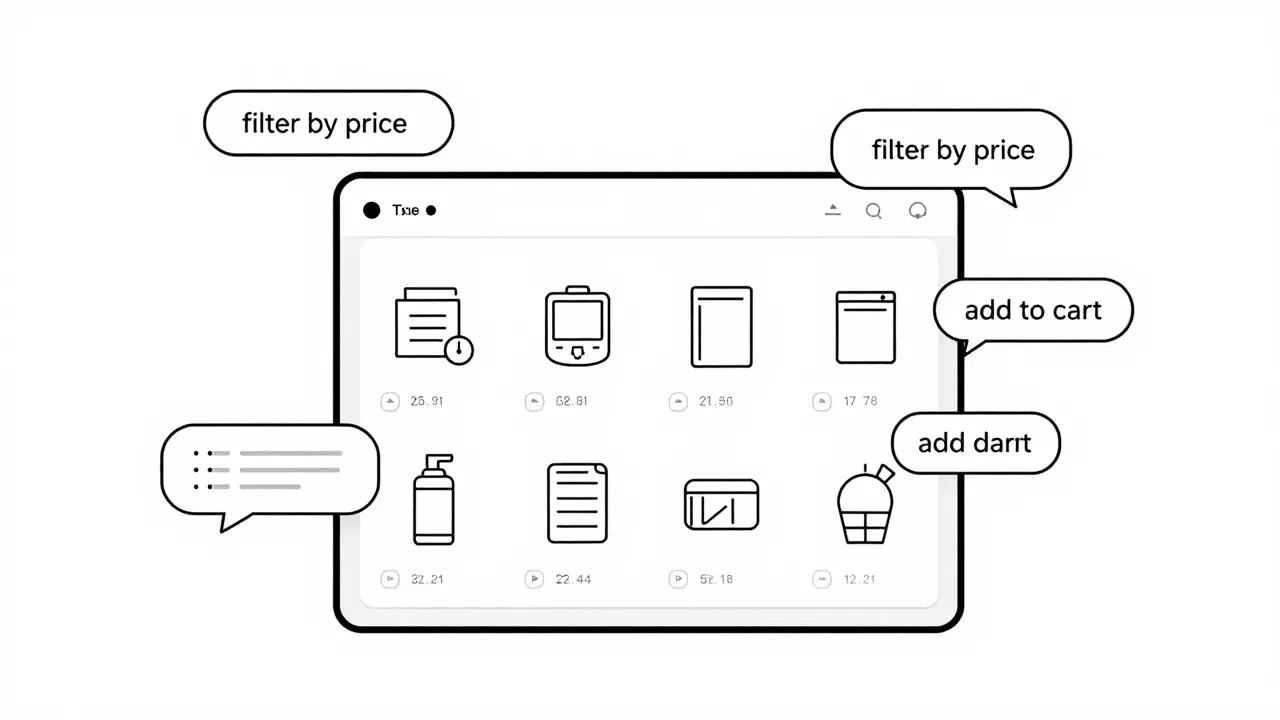
The core idea is simple: you type, “Create a product grid with filter by price,” and the platform generates HTML, CSS, and JavaScript. You tweak the prompt, refine the output, and repeat. According to Tech.co’s 2026 analysis, these platforms achieve 78-85% completeness in the first iteration. That’s not perfect, but it’s far ahead of starting from a blank file.
For small businesses and solo founders, this lowers the barrier to entry. Dr. Elena Rodriguez from MIT notes that vibe coding democratizes development, allowing non-technical users to prototype ideas that previously cost $5,000-$10,000 in developer fees. But it’s not magic-it requires understanding e-commerce logic, API structures, and user experience principles.
How Vibe Coding Compares to Traditional Development
If you’ve ever hired a dev team to build a custom storefront, you know the timeline: discovery, wireframing, coding, testing, deployment. Knack’s 2025 study of 127 teams found that traditional web development averages 17.3 hours just to reach a basic prototype. Vibe coding slashes that to 3.2 hours.
But speed comes with trade-offs. Pure no-code platforms like Wix or Squarespace are faster for static sites but lack customization. Vibe coding sits in the middle: it offers 43% more flexibility than no-code tools while keeping 89% of their speed advantage (Coredna, August 2025). However, for enterprise-level integrations-like syncing with legacy ERP systems-traditional coding still wins by 32% in synchronization speed.
| Feature | Vibe Coding | Traditional Coding | No-Code Platforms |
|---|---|---|---|
| Time to Prototype | 3.2 hours | 17.3 hours | 1-2 hours |
| Customization Level | High | Very High | Low |
| Learning Curve | Moderate (basic HTML/CSS helpful) | Steep (JS/React required) | Easy |
| Best For | Rapid prototyping, A/B tests | Complex integrations, scale | Simple stores, quick launches |

Building Product Catalogs with Vibe Coding
Product catalogs are the backbone of any e-commerce site. With vibe coding, you can describe your ideal layout in plain English. For example: “Create a responsive product grid with image hover effects, price filters, and category tabs.” The AI generates the structure, and you adjust styling or functionality as needed.
One practical win is mock data generation. Developer @ecommercehacker shared on GitHub that they created realistic JSON for 500 products in 15 minutes using natural language prompts. This speeds up testing significantly. Instead of manually entering dummy data, you get structured, usable content instantly.
However, don’t expect perfection on the first try. Most teams need 3-5 iterations to refine filtering logic, ensure mobile responsiveness, and optimize load times. Also, remember that vibe coding works best when you understand the underlying components. If you don’t know what a ‘variant selector’ is, the AI can’t guess your intent accurately.
Creating Checkout Flows Safely
Checkout flows are where things get tricky. Payment processing requires security, compliance, and error handling-areas where AI-generated code can stumble. PayPal’s guidelines explicitly warn against connecting vibe-coded projects directly to core business systems like inventory or payment gateways unless thoroughly tested.
Here’s how to do it right:
- Use Sandbox Environments: Never test live payments with unverified code. PayPal and Stripe offer sandbox modes for safe experimentation.
- Generate Unit Tests: Ask AI tools like Gemini to create unit tests for your checkout logic. This catches edge cases early.
- Avoid Direct ERP Connections: Keep vibe-coded checkouts isolated until they’re production-ready. Route data through read-only APIs if needed.
- Check Webhook Configurations: 29% of first-time implementation errors involve incorrect webhook setups, leading to failed transaction notifications.
In January 2026, 27% of PayPal support tickets related to vibe coding involved webhook issues. One incident saw 12,000 test transactions appear in live merchant accounts due to misconfigured flows. These mistakes are preventable with proper safeguards.
When Vibe Coding Shines-and When It Fails
Vibe coding isn’t a one-size-fits-all solution. It excels in specific scenarios:
- Promotional Storefronts: Launch temporary holiday shops in under 4 hours.
- A/B Testing Interfaces: Build multiple checkout variations in 90 minutes to test conversion rates.
- Niche Market Checkouts: Customize flows for unique products (e.g., subscription boxes) in 3-6 hours.
But it falls short in others:
- Complex Tax Calculations: Multi-region tax rules require precise logic that AI may oversimplify.
- Deep Inventory Syncing: Real-time stock updates across warehouses need robust backend integration.
- Enterprise Security Compliance: PCI-DSS requirements often demand manual audits and custom configurations.
Shopify’s Marcus Chen warns that 68% of vibe-coded implementations require significant developer intervention before going live. That’s not a failure-it’s a reality check. Use vibe coding to accelerate, not replace, professional development.

Tools and Platforms Leading the Charge
The vibe coding ecosystem is growing fast. As of March 2026, Replit holds 32% market share among developers, thanks to its seamless PayPal SDK integration. Lovable dominates Shopify-focused solutions with 27% share, offering one-click theme integration that cuts storefront creation to under 90 seconds. Cursor serves enterprise clients with 19% share, focusing on scalable, secure implementations.
New entrants like Base44 struggle with documentation clarity (rated 2.8/5 by Tech.co), while established players improve steadily. Google plans to release ‘Gemini Commerce Assistant’ in Q3 2026, trained specifically on e-commerce patterns. Meanwhile, Shopify’s leaked roadmap hints at native vibe coding support for theme customization by October 2026.
Security and Best Practices
With great power comes great responsibility. Vibe coding introduces new risks if used carelessly. Here’s how to stay safe:
- Sandbox Everything: Mock data, anonymize inputs, and route through read-only APIs during testing.
- Validate API Keys: Ensure credentials are never hardcoded or exposed in public repositories.
- Test Payment Flows Rigorously: Use PayPal’s enhanced security features, including automatic PCI compliance checks launched in January 2026.
- Document Iterations: Track changes between drafts to identify where bugs creep in.
Coredna recommends treating vibe-coded projects as ‘Green Zone’ experiments-never connected to core systems until fully vetted. This mindset prevents costly mistakes and builds trust in the process.
The Future of Vibe Coding in E-Commerce
Gartner predicts that by 2027, 70% of e-commerce development platforms will include vibe coding capabilities. Adoption is already rising: 43% of new sites launched in Q4 2025 used some form of AI-assisted development, up from 12% a year earlier. SMBs drive this growth, seeking affordable ways to compete with larger brands.
But consolidation is coming. Smaller platforms may merge or be acquired as standards emerge. Enterprise adoption remains cautious-only 18% of Fortune 500 teams use vibe coding for production systems, though 67% leverage it for prototyping. Security concerns keep large organizations hesitant, but improved tooling and clearer guidelines should ease those fears over time.
Long-term, vibe coding won’t replace developers. Instead, it will augment them, freeing up time for strategic work rather than repetitive coding tasks. Think of it like Excel for finance: a tool that empowers users to solve problems faster, not eliminate experts.
Is vibe coding suitable for beginners?
Yes, but with caveats. Users with basic HTML/CSS knowledge become proficient in about 4.7 hours, according to Replit’s 2026 metrics. Complete beginners take longer (~11.3 hours) and benefit from tutorials focused on e-commerce logic and API basics.
Can I use vibe coding for my Shopify store?
Absolutely. Platforms like Lovable integrate directly with Shopify, enabling rapid theme customization and storefront creation. Look for tools labeled ‘Shopify-integrated’ for smoother workflows.
How secure is vibe-coded checkout code?
Security depends on your practices. Always use sandbox environments, validate API connections, and run automated tests. PayPal’s 2026 updates include automatic PCI compliance checks, but vigilance is still required.
Does vibe coding replace traditional developers?
No. While it accelerates prototyping, 68% of implementations need developer refinement for production. View it as a collaboration tool, not a replacement.
What are the biggest pitfalls of vibe coding?
Common issues include webhook misconfigurations (29% of errors), incorrect payment logic (22%), and over-reliance on AI without understanding underlying structures. Test thoroughly and document every step.
Which vibe coding platform is best for e-commerce?
Replit leads for general development (32% market share), Lovable excels for Shopify users (27%), and Cursor targets enterprises (19%). Choose based on your tech stack and integration needs.
Will vibe coding become standard in e-commerce?
Likely yes. Gartner forecasts 70% of platforms will incorporate vibe coding by 2027. It’s already adopted by 43% of new e-commerce sites in late 2025, signaling strong momentum.
How many iterations does vibe coding typically require?
Most projects need 3-5 iterations to reach production readiness. First drafts hit 78-85% completeness, so plan time for refinement, testing, and debugging.
Can I sync vibe-coded catalogs with my inventory system?
Not directly. Vibe coding lacks deep ERP integration capabilities. Use read-only APIs or middleware to connect generated catalogs with existing inventory databases safely.
What skills do I need to start vibe coding?
Basic understanding of e-commerce concepts, API principles, and HTML/CSS helps. Advanced JavaScript isn’t mandatory initially but becomes useful for complex customizations later.
 Artificial Intelligence