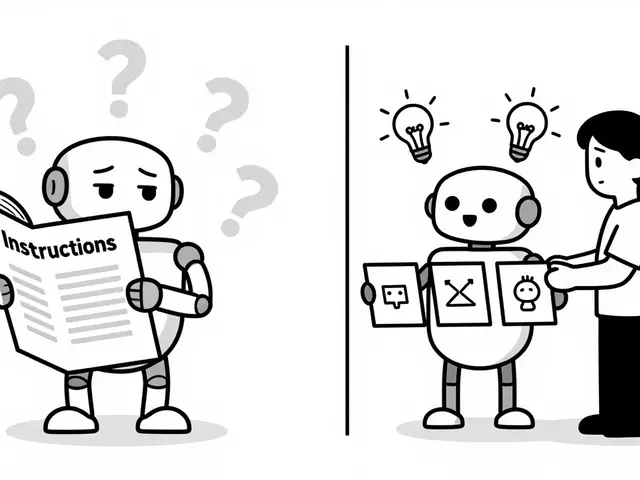
You spend weeks tweaking a Large Language Model to handle your specific customer support tickets. The metrics look great. Accuracy is up. Response time is down. But then you ask it to summarize a news article or write a Python script, and it stumbles. It sounds robotic, forgets basic grammar rules, or hallucinates facts it knew before. This is the classic trap of benchmark transfer failure. You optimized for one task and accidentally broke the model's general intelligence.
It’s frustrating because you thought fine-tuning was just about adding knowledge. In reality, it’s a delicate balancing act between specialization and preservation. If you push too hard on the new task, you lose the broad capabilities that made the model useful in the first place. This phenomenon, often called catastrophic forgetting, is the biggest hurdle in deploying specialized LLMs. Let’s break down why this happens, how modern techniques like LoRA help, and what you can actually do to keep your models smart across the board.
The Core Problem: Specialization vs. Generalization
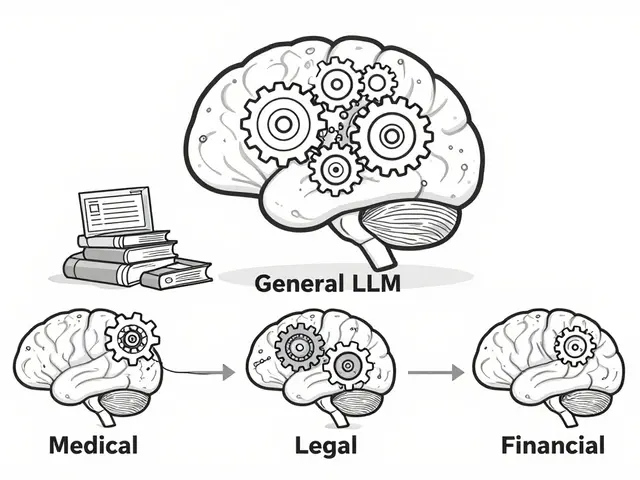
Think of a pre-trained LLM as a well-read generalist. It knows a bit about everything-code, history, biology, slang. When you fine-tune it, you’re essentially sending it to a vocational school for a specific trade. The problem arises when the training process overwrites the general education with the vocational specifics. Technically, this happens because gradient descent updates the model's weights to minimize loss on your small, specific dataset. If those updates are too aggressive, they overwrite the subtle patterns that encoded general language understanding.
This isn't just theoretical. Researchers have observed that models heavily fine-tuned on legal documents might struggle with casual conversation. Models tuned for code generation might fail at creative writing. The core issue is that standard fine-tuning treats all parameters equally. It doesn't know which weights are crucial for general syntax and which are specific to your niche. As a result, the model becomes a specialist but loses its versatility. Benchmark transfer measures exactly this: does the model still perform well on standard benchmarks (like MMLU or HumanEval) after being trained on your custom data?
Why Standard Fine-Tuning Breaks Things
To understand why things break, you need to look at the mechanics of weight updates. During full fine-tuning, every single parameter in a model with billions of weights gets adjusted. Even tiny changes across billions of parameters add up to massive shifts in the model's behavior. If your dataset is small-which it usually is-you risk overfitting. The model memorizes your examples instead of learning generalizable patterns. It starts associating specific words with your specific tasks, losing the broader semantic connections it learned during pre-training.
Consider a scenario where you fine-tune a model on medical Q&A. The model learns that "heart" is closely related to "cardiology" and "EKG." Great. But if the training runs for too many epochs, it might start ignoring the word "heart" in non-medical contexts, like "break my heart" or "heart of the matter." The semantic space has been warped. This warping is what causes poor performance on out-of-domain tasks. You didn't teach it to be bad at English; you just taught it to be so good at medicine that it forgot how to speak normally outside of hospitals.
Enter Parameter-Efficient Fine-Tuning (PEFT)
This is where Parameter Efficient Fine-Tuning (PEFT) saves the day. Instead of updating all billion-plus parameters, PEFT methods freeze the original model weights and train only a small set of new parameters. Think of it as attaching a sticky note to a book rather than rewriting the whole text. The most popular method here is Low-Rank Adaptation (LoRA).
LoRA works by injecting trainable rank decomposition matrices into each layer of the Transformer architecture. These matrices are much smaller than the original weight matrices. Because the base model stays frozen, its general knowledge remains intact. The LoRA adapters learn the specific task adjustments on top of that stable foundation. Studies show that LoRA can reduce the number of trainable parameters by up to 10,000 times while achieving performance comparable to full fine-tuning. More importantly, it drastically reduces catastrophic forgetting. Since the core weights aren't moving, the general linguistic capabilities stay put.
| Method | Trainable Parameters | Memory Usage | Risk of Forgetting | Best Use Case |
|---|---|---|---|---|
| Full Fine-Tuning | 100% | Very High | High | Massive datasets, complete domain shift |
| LoRA | <1% | Low | Low | Specialized tasks, limited resources |
| QLoRA | <1% | Very Low | Low | Consumer hardware, large models |
| Prompt Tuning | <0.1% | Minimal | Very Low | Simple style or format adjustments |
Techniques to Preserve General Capabilities
Using LoRA is step one, but it’s not a magic bullet. You still need to tune how you train. Here are practical strategies to ensure your model keeps its smarts:
- Mix Your Data: Don’t just feed the model your specific task data. Mix in a portion of general instruction-following data from the pre-training phase. A common ratio is 80% task-specific data and 20% general data. This acts as an anchor, reminding the model of its broader skills during every batch update.
- Lower Learning Rates: Aggressive learning rates cause rapid weight shifts. Try reducing your learning rate by half or more compared to what you’d use for full fine-tuning. Slower convergence often leads to better retention of general features.
- Early Stopping: Monitor validation loss not just on your task, but on a general benchmark. Stop training as soon as the general performance starts to dip, even if task performance is still improving slightly. Diminishing returns on the special task aren’t worth losing general fluency.
- Use Smaller Rank Sizes: In LoRA, the rank determines the capacity of the adapter. A lower rank forces the model to learn simpler, more robust adaptations rather than complex, overfitted patterns. Start low (e.g., rank 4 or 8) and increase only if necessary.

Evaluating True Benchmark Transfer
How do you know if you’ve succeeded? You can’t just look at your custom test set. You need a dual-evaluation strategy. First, measure performance on your target task. Did accuracy improve? Good. Second, run the model against standard public benchmarks. If you’re working with coding models, run HumanEval. For general reasoning, try MMLU or GSM8K. Compare these scores to the base model’s scores.
If your specialized model scores within 5-10% of the base model on these general benchmarks, you’ve achieved good transfer. If it drops by 30%, you’ve suffered significant forgetting. Tools like Hugging Face Evaluate make this easy to automate. Set up a pipeline that automatically triggers these evaluations whenever you save a checkpoint. This gives you real-time feedback on whether your training is helping or hurting the model’s overall intelligence.
Another advanced technique is using contrastive evaluation. Ask the model to perform both the specialized task and a control task in the same session. Does the context of the specialized task bleed into the control task? For example, if you fine-tuned for formal legal writing, does the model now refuse to use contractions in casual chat? This contextual leakage is another form of poor transfer that standard static benchmarks might miss.
Real-World Implications for Developers
For developers building AI applications, this means you can no longer treat fine-tuning as a black box. You need to budget compute for evaluation, not just training. If you’re using cloud services, factor in the cost of running inference on multiple benchmarks. It adds up, but it’s cheaper than debugging a broken production model.
Also, consider multi-task fine-tuning. Instead of training one model per task, train a single model on a diverse mix of tasks using LoRA adapters that can be swapped in and out. This approach leverages the shared underlying knowledge of the base model. It’s more efficient and often results in better generalization because the model learns to distinguish between different types of instructions without overwriting its core weights.
Finally, remember that newer models are getting better at this out of the box. Base models released in late 2024 and 2025 have improved regularization techniques baked into their pre-training. They are naturally more resistant to forgetting. However, they are not immune. Always validate. The gap between a smart model and a specialized-but-broken model is often just a few hyperparameter tweaks away.
What is catastrophic forgetting in LLMs?
Catastrophic forgetting occurs when a neural network loses previously learned information upon learning new information. In LLMs, this manifests as a decline in general language capabilities (like grammar, logic, or broad knowledge) after being fine-tuned on a narrow, specific dataset. The model becomes overly specialized and fails on out-of-domain tasks.
Does LoRA completely prevent catastrophic forgetting?
No, LoRA significantly reduces the risk but doesn't eliminate it entirely. Because LoRA modifies the effective weights through adapters, there is still some interference with the base model's representations. However, it preserves general capabilities far better than full fine-tuning, especially when combined with mixed-data training strategies.
Which benchmarks should I use to check for transfer?
Choose benchmarks relevant to the base model's strengths. For general reasoning, use MMLU (Massive Multitask Language Understanding). For coding, use HumanEval or MBPP. For math, use GSM8K. Always compare the fine-tuned model's scores against the unmodified base model's scores to quantify the drop in performance.
Is mixing general data with task data always necessary?
It is highly recommended for most scenarios. Mixing in 10-20% of general instruction data helps anchor the model's weights to the original distribution. Without it, the model drifts too far from its pre-trained state, leading to poorer generalization on unseen tasks.
Can I fix a model that has already forgotten?
Not easily. Once weights are overwritten, the original general knowledge is largely lost unless you re-train from the base checkpoint. Prevention is key. If you've already fine-tuned and seen degradation, try merging the LoRA adapters back into the base model and re-fine-tuning with a lower learning rate and mixed data.
 Artificial Intelligence