Remember when buying a server felt like a massive commitment? Now, paying for Generative AI is a complex mix of per-token API fees, subscription models, and heavy GPU infrastructure costs can feel just as daunting. If you are looking at your cloud bill and wondering why it jumped by 40% this month, you are not alone. The landscape has shifted dramatically between 2024 and 2026. What started as an experimental R&D expense has become a core operational cost center for most tech companies.
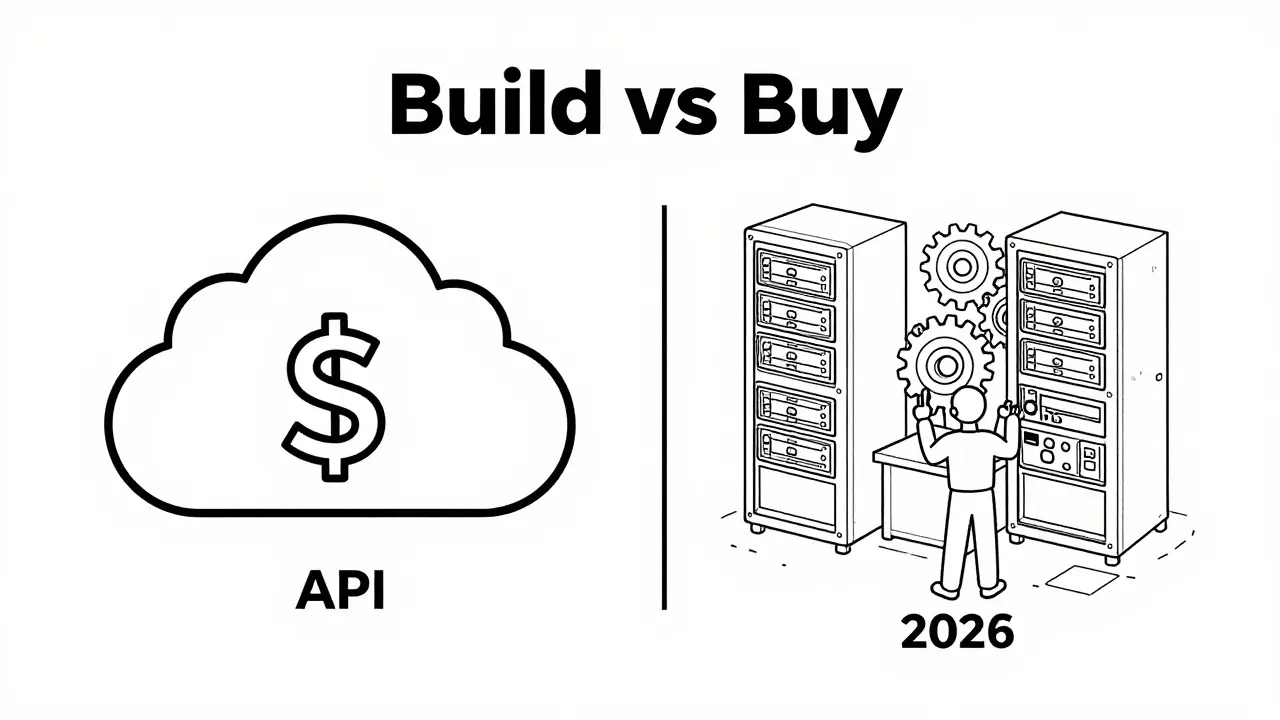
The big question isn't just "how much does it cost?" It is "should we keep renting intelligence from OpenAI or Anthropic, or should we build our own house with open-weight models like Meta’s Llama?" This decision-the classic build vs buy dilemma-defines your bottom line. Getting it wrong means either bleeding cash on inefficient API calls or wasting engineering hours maintaining underused GPUs. Let's break down the real numbers, the hidden traps, and how to calculate your actual return on investment (ROI) in 2026.
Understanding the Token Economy
To manage costs, you first need to speak the language of the providers. That language is the Token is the basic unit of text that Large Language Models process and bill for, typically representing about 4 characters in English. Think of tokens as the calories of AI. You pay for what you eat (input) and what you digest (output).
Most people forget that output tokens usually cost 3 to 5 times more than input tokens. Why? Because generating new text requires significantly more compute power than reading existing text. If your application sends a long context window but gets a short answer, you are mostly paying for input. If it generates a long report, you are paying a premium for output.
In early 2026, the market has stratified into clear tiers:
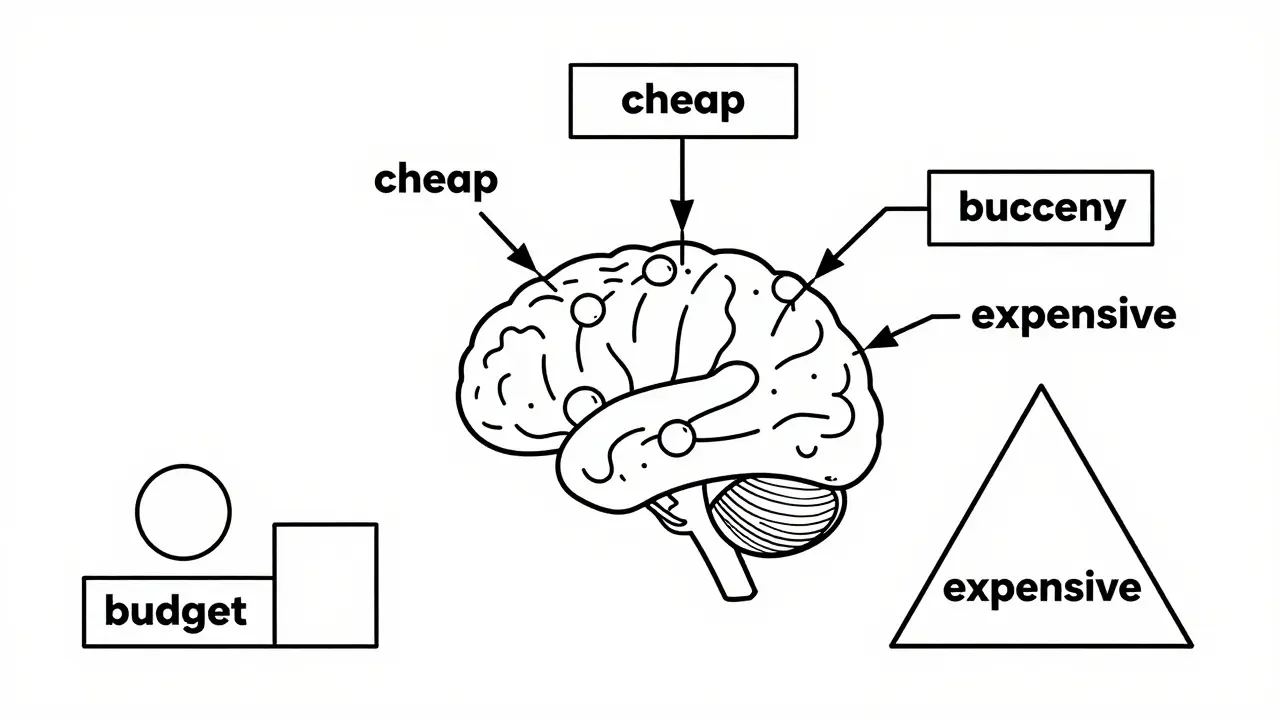
- Budget Tier: Models like Gemini 1.5 Flash or GPT-4o Mini. Input prices hover around $0.08-$0.15 per million tokens. These are great for lightweight tasks, summarization, or high-volume internal tools.
- Mainstream Tier: Models like GPT-4o or Claude 3.5 Sonnet. Input prices range from $1.25 to $3.00 per million tokens. This is where most enterprise applications live today.
- Premium Reasoning Tier: Models like Claude Opus 4.5 or specialized reasoning versions of GPT-5. Input prices can hit $5.00 to $15.00 per million tokens, with output soaring up to $75.00 per million. You only use these for complex logic, coding, or high-stakes analysis.
A common mistake is picking a premium model for a simple task. Using a $15/million-token model to classify customer emails is like using a sports car to deliver pizza. It works, but it burns fuel you don't need to spend.
The Build vs Buy Decision Matrix
This is the crossroads every CTO faces. Do you buy API access (SaaS) or do you build self-hosted infrastructure?
Buying (APIs) is simpler. You have zero upfront hardware costs. You scale instantly. However, you pay a markup for convenience and risk vendor lock-in. For low-to-moderate usage-say, under 1 billion tokens per month-buying is almost always cheaper because you avoid the overhead of hiring ML engineers and managing clusters.
Building (Self-Hosting) involves downloading open-weight models like Meta’s Llama 3 or Mistral and running them on your own GPUs. The per-token cost drops drastically once you hit scale. But you take on all the operational risk. You need to handle security, updates, latency optimization, and hardware failures.
| Factor | Buy (Commercial APIs) | Build (Self-Hosted) |
|---|---|---|
| Upfront Cost | Near Zero | High ($30k+ per H100 GPU) |
| Per-Token Cost | Higher ($0.15 - $15.00 / 1M) | Lower (Can drop below $0.10 / 1M at scale) |
| Engineering Overhead | Low (Integration only) | High (DevOps, MLOps, Monitoring) |
| Data Privacy | Dependent on Vendor Policy | Full Control (On-Prem/Private Cloud) |
| Break-Even Point | Best for < 1B tokens/month | Best for > 10B tokens/month |
The magic number often cited in 2026 analyses is roughly 10 billion input tokens per month. If you are processing less than that, the savings from self-hosting rarely cover the salary of the two senior engineers needed to maintain the system. If you are processing more, self-hosting becomes a financial no-brainer, provided you have the technical team to support it.
Infrastructure Costs: The Hidden GPU Bill
If you choose to build, you enter the world of GPU economics. In 2026, about 80% of AI GPU spending comes from inference (running the model) rather than training (creating the model). This is a crucial shift. Training is a one-time event; inference is a recurring monthly bill that grows with every user.
You need to understand the hardware hierarchy. A single NVIDIA H100 80GB card costs around $30,000 if bought outright, or $3-$10 per hour in the cloud. An older A100 might run $1.50/hour, while mid-range cards like the L40 or A40 can be found for $0.50-$1.00/hour.
Here is the trap: Larger models require more memory (VRAM). A 70-billion parameter model like Llama 3 70B needs significantly more VRAM than a 7-billion parameter model. This forces you to use more expensive GPUs or cluster multiple smaller ones together, which introduces complexity and communication overhead. As a rule of thumb, running a 70B model costs 2-3 times more per token than a 7B model due to memory bandwidth constraints.
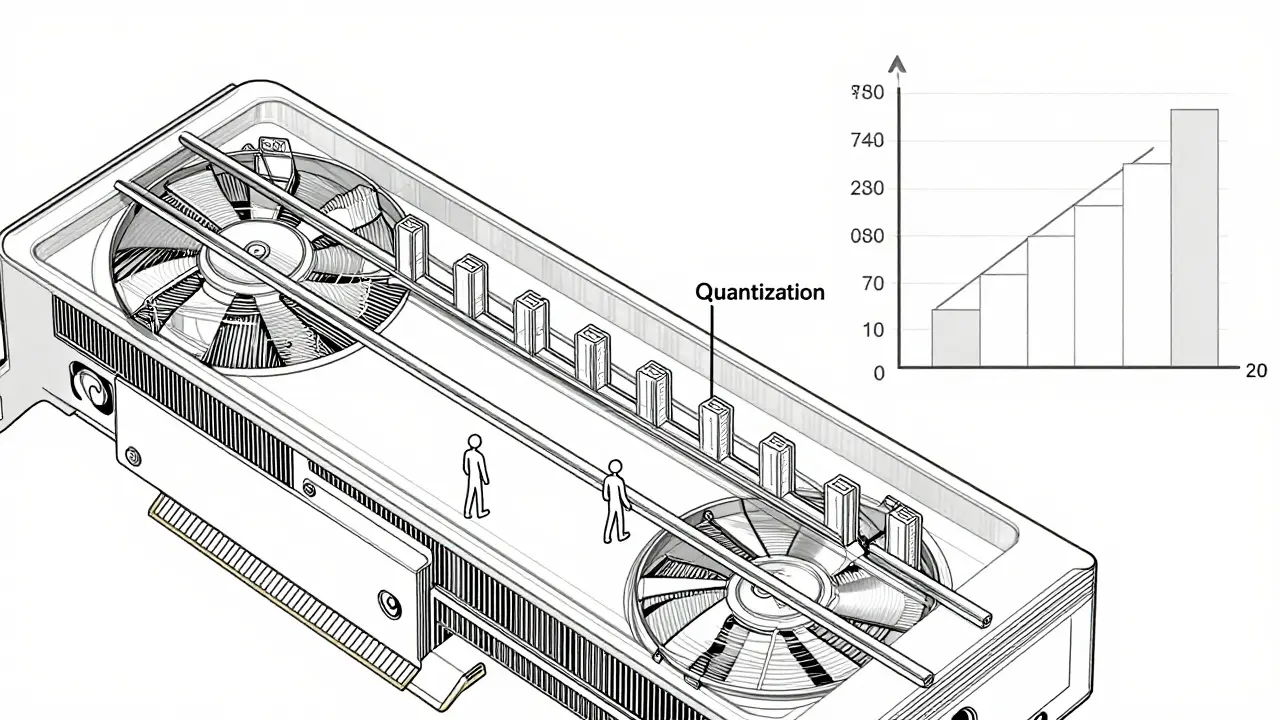
Don't over-provision. Many teams rent H100s out of fear, when an L40 would suffice for their quantized model. Quantization-reducing the precision of the model weights from 16-bit to 8-bit or 4-bit-can cut memory requirements in half with minimal loss in quality for many tasks. This allows you to run larger models on cheaper hardware.
Optimizing Your AI Spend: Practical Tactics
You cannot control the base price of tokens, but you can control how many you use. Here are four concrete strategies to lower your bill immediately:
- Implement Token Budgets per Session: Set hard limits on maximum output tokens. If a user asks for a summary, cap the response at 500 tokens. Verbose models can double your costs by adding fluff. Concise prompts yield concise, cheaper answers.
- Use Caching Aggressively: Providers like DeepSeek and Anthropic offer cached input pricing. If you send the same system prompt or context window repeatedly, cache it. DeepSeek V3.2, for example, offers cached input at $0.028 per million tokens versus $0.28 uncached. That is a 10x saving on inputs alone.
- Route Traffic by Complexity: Don't send every query to your best model. Use a cheap classifier (like a small BERT model or a tiny LLM) to determine intent. Simple questions go to GPT-4o Mini or Gemini Flash. Complex reasoning tasks get routed to Claude Opus or GPT-5. This hybrid approach keeps average costs down.
- Track Business Metrics, Not Just Tokens: Stop asking "How many tokens did we use?" Start asking "What is the cost per resolved support ticket?" or "Cost per qualified lead?" This shifts the conversation from technical overhead to business value. If a feature costs $0.05 per user session but increases retention by 5%, it is profitable regardless of the token count.
Calculating Real ROI for Generative AI
Return on Investment is often miscalculated because teams focus only on the software license or API bill. True ROI includes the full stack:
- Direct Compute Costs: API fees or GPU rental.
- Engineering Time: Hours spent integrating, monitoring, and debugging.
- Opportunity Cost: What else could those engineers be building?
- Quality Adjustments: Does the AI output reduce human review time? If an AI draft cuts editing time by 50%, that labor saving is part of your ROI.
A practical heuristic for 2026: If your monthly AI spend exceeds $10,000, you must implement FinOps practices. This means tagging every API call with a project ID, setting budget alerts, and reviewing top-spending endpoints weekly. Without visibility, costs will creep up unnoticed as features expand.
Also, consider the "hidden" experimentation costs. Teams often burn millions of tokens testing prompts or evaluating new models. Separate these costs from production bills. Treat experimentation as R&D, not operations. This prevents your production P&L from being distorted by trial-and-error phases.
Future Trends: Beyond Tokens
The market is moving away from raw token billing for end-users. While providers still charge developers per token, SaaS products are increasingly adopting "outcome-based" pricing. Instead of charging per token, they charge per document summarized, per image generated, or per seat.
Internally, however, token efficiency remains king. We expect per-token prices to continue dropping-potentially another 10x reduction by 2028-as hardware improves and models become more efficient. But usage will grow faster than prices fall. Therefore, the companies that win will be those that optimize their architecture now, not those who wait for cheaper APIs.
Start small. Measure everything. Choose the cheapest model that meets your quality threshold. And remember, the most expensive AI is the one you don't monitor.
What is the break-even point for self-hosting LLMs vs using APIs?
Generally, self-hosting becomes cost-effective when you process more than 10 billion input tokens per month. Below this volume, the fixed costs of hardware, electricity, and engineering salaries outweigh the variable savings of lower per-token rates. Above this volume, self-hosting can reduce costs by 10x or more compared to premium APIs.
Why are output tokens more expensive than input tokens?
Output tokens are more expensive because generating new text requires the model to perform complex probabilistic calculations for each token, consuming more GPU compute power. Reading input text is computationally lighter. Most providers charge 3 to 5 times more for output than input.
Which GPU is best for running LLMs in 2026?
It depends on the model size. For large 70B+ parameter models, NVIDIA H100s or A100s are preferred due to high VRAM and bandwidth. For smaller 7B-13B models or quantized versions, mid-range GPUs like the L40 or A40 offer better cost-per-hour efficiency. Always match GPU VRAM to model size requirements.
How can I reduce my generative AI API costs?
You can reduce costs by using cheaper models for simple tasks, implementing aggressive caching for repeated prompts, setting maximum output token limits, and optimizing prompts to be concise. Additionally, routing traffic intelligently based on complexity ensures you only pay for premium power when necessary.
Is it cheaper to use open-weight models like Llama?
Yes, if you self-host them at scale. Open-weight models eliminate licensing fees and allow you to control infrastructure costs. However, you must account for the engineering effort required to deploy and maintain them. For low volumes, using hosted APIs for these models (via providers like Together AI or Groq) may still be more economical than building your own infrastructure.
 Artificial Intelligence