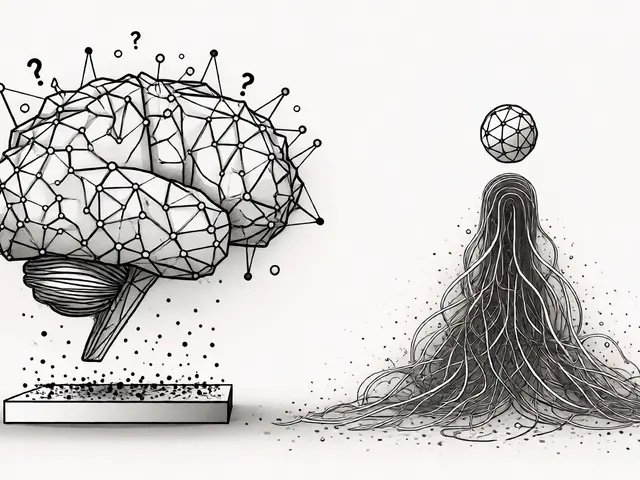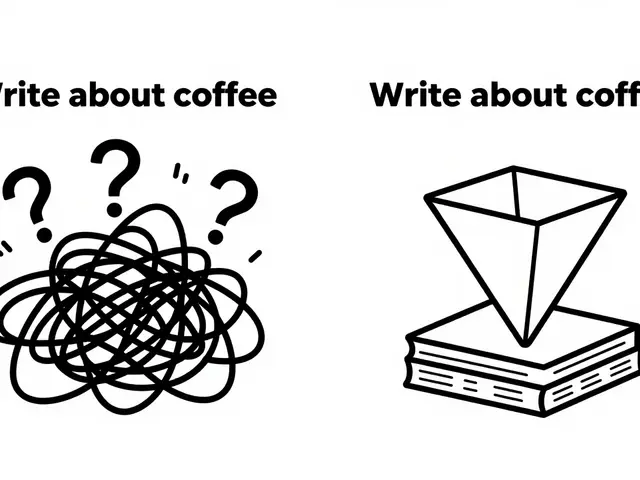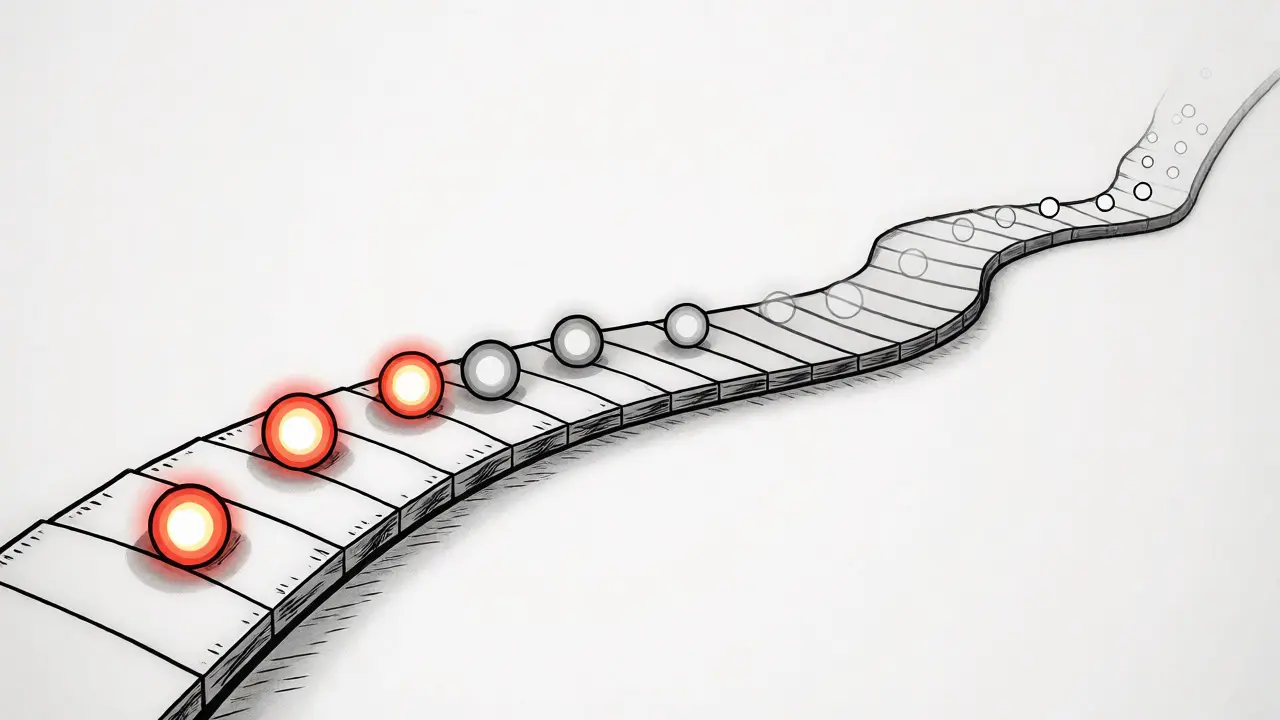
You probably use a chatbot every day without thinking about the engineering nightmare that preceded it. Before Large Language Models (LLMs) like GPT-4 or Llama could process entire books in seconds, researchers were stuck fighting a fundamental flaw in how computers read text. They had to remember everything one word at a time. This sequential bottleneck killed performance. The solution came from an unlikely hero: the Long Short-Term Memory network, or LSTM. It didn't just fix a bug; it proved that machines could handle long-range dependencies. That proof was the bridge to the Transformer architecture we rely on today.
The Problem with Remembering
To understand why LSTMs mattered, you have to look at what came before them: standard Recurrent Neural Networks (RNNs). Imagine trying to summarize a novel by reading one sentence, forgetting the previous one immediately, and only keeping a vague feeling of the plot. That’s a basic RNN. As data flows through these networks over many steps, the signal gets weaker. This is the vanishing gradient problem. If a model needs to connect the subject of a sentence at the beginning with the verb at the end, a standard RNN often loses track of the connection entirely.
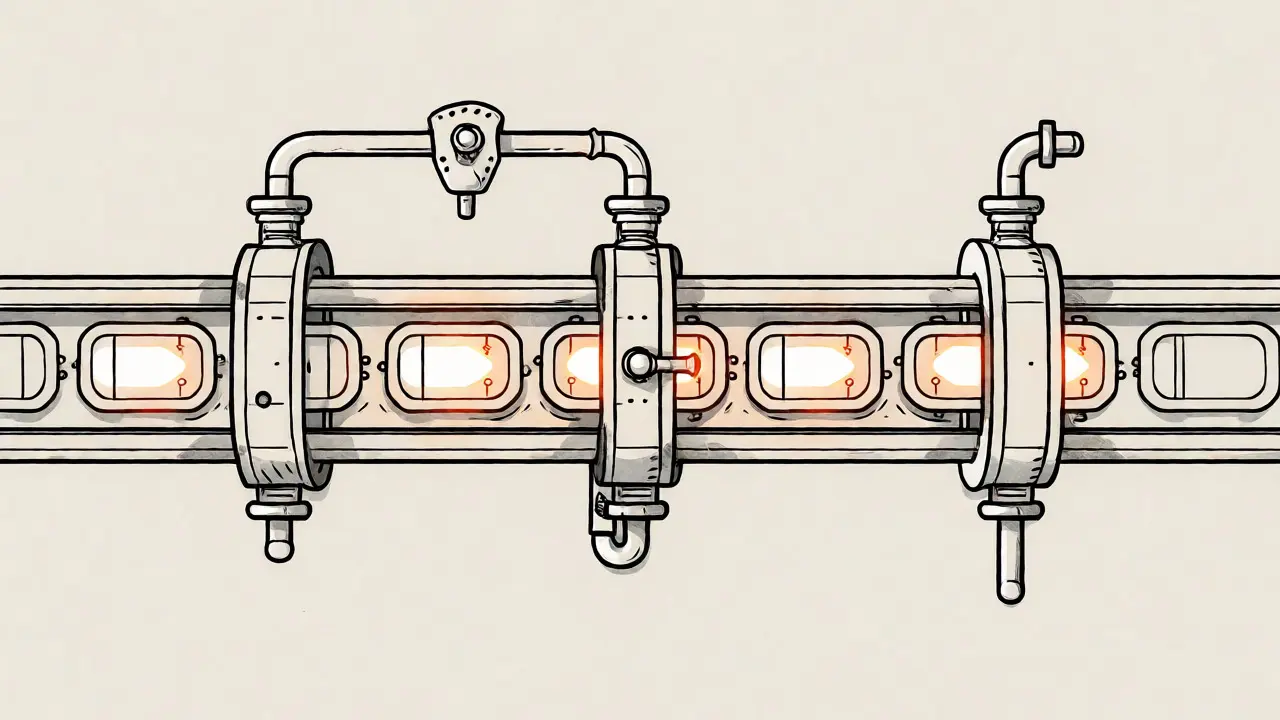
LSTMs solved this by adding memory. But not just any memory-controlled memory. Developed in the late 1990s by Hochreiter and Schmidhuber, LSTMs introduced a cell state that acts like a conveyor belt running straight down the chain. Information can flow along it unchanged unless specific gates decide to modify it. These gates are simple neural network layers that output values between 0 and 1. A value of 0 means "let nothing pass," and 1 means "let everything pass." By learning which parts of the sequence to keep and which to discard, LSTMs could retain relevant context over hundreds of words. This capability made them the gold standard for natural language processing for nearly two decades.
Gates and Grit: How LSTMs Worked
The genius of the LSTM lies in its gating mechanism. There are three main gates working together:
- The Forget Gate: Decides what information from the previous cell state should be thrown away. For example, if the gender of a noun changes in a sentence, the forget gate might drop the old pronoun association.
- The Input Gate: Determines which new values to update in the cell state. It filters the current input data.
- The Output Gate: Controls what part of the cell state becomes the hidden state (the output) for the next step.
This structure allowed LSTMs to capture long-range dependencies effectively. In machine translation tasks, an LSTM could remember the start of a long paragraph while translating the end. However, this sophistication came at a cost. Because LSTMs process data sequentially-one token after another-you cannot parallelize the computation across a GPU. You have to wait for step $t$ to finish before starting step $t+1$. For small datasets, this was fine. But as we moved toward training on billions of words, this sequential bottleneck became a massive wall.
The Attention Shift
Researchers knew sequential processing was limiting scalability. The first workaround was attention mechanisms added to LSTMs. Instead of compressing the whole history into a single fixed-size vector, attention allowed the model to look back at specific previous words when generating the current one. This improved performance significantly in translation tasks. But it still relied on the underlying recurrent structure. The real breakthrough happened in 2017 with the paper "Attention Is All You Need" by Vaswani et al.
They proposed the Transformer, a model that ditched recurrence entirely. Instead of passing information step-by-step, Transformers use self-attention to calculate relationships between all words in a sequence simultaneously. If the word "bank" appears near "river," the model assigns high attention weights between them instantly, regardless of distance. This parallelization meant you could train on massive datasets much faster because GPUs could crunch all those comparisons at once.
| Feature | LSTM Network | Transformer Model |
|---|---|---|
| Processing Method | Sequential (step-by-step) | Parallel (all tokens at once) |
| Memory Mechanism | Gated Cell State | Self-Attention & Positional Encoding |
| Scalability | Limited by sequence length | Highly scalable with hardware |
| Training Speed | Slow for long sequences | Fast due to parallelization |
| Primary Use Case | Time-series, short-text NLP | LLMs, Translation, Generative AI |
Why LSTMs Were Essential Despite Their Flaws
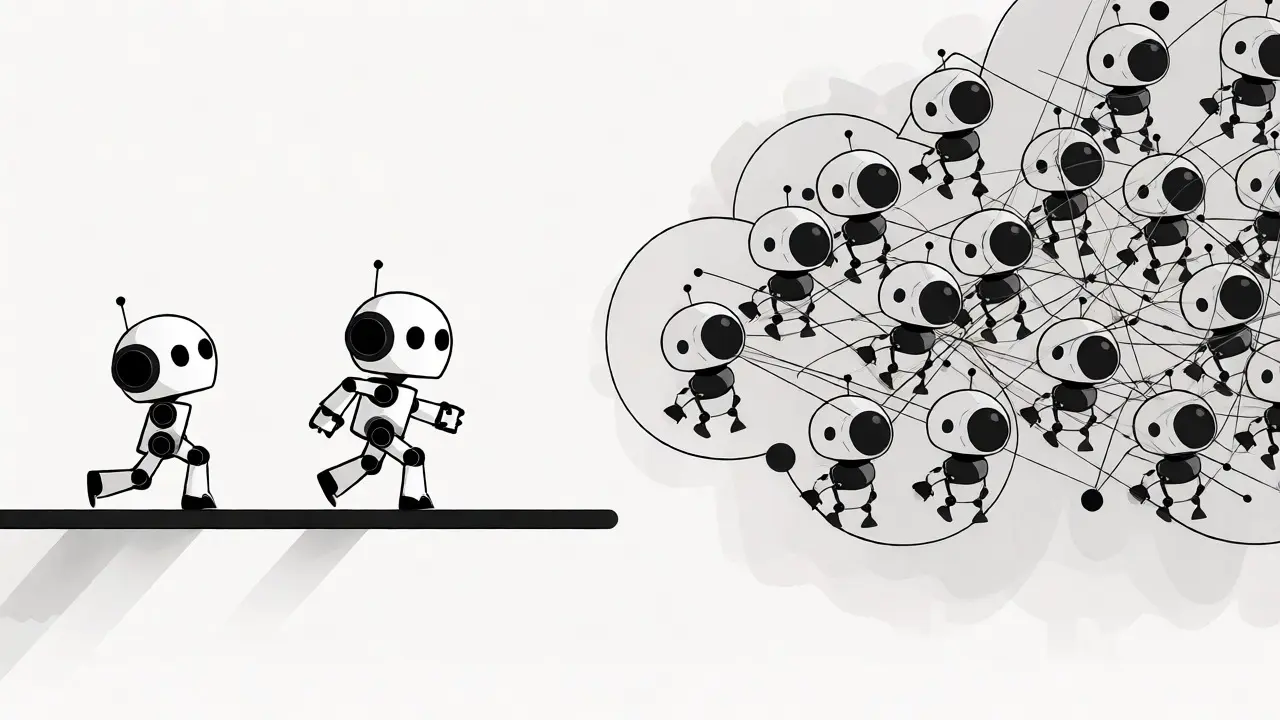
It’s easy to dismiss LSTMs as obsolete now that Transformers dominate. But that view misses the point. LSTMs proved that deep learning could handle variable-length sequences and complex linguistic structures. Without LSTMs, we wouldn't have understood the importance of memory retention in neural nets. They provided the conceptual framework that inspired attention mechanisms. When researchers saw that attention helped LSTMs focus better, they realized attention itself could be the primary mechanism, not just a helper.
Furthermore, LSTMs remain useful today. For tasks involving short sequences or where computational resources are limited, LSTMs are often more efficient than Transformers. In time-series forecasting, such as predicting stock prices or weather patterns, LSTMs still perform competitively. A study comparing Chicago public transit ridership forecasting found nearly identical results between LSTM and Transformer models for short-horizon predictions. The Transformer's advantage shines when dealing with massive context windows and complex interdependencies across thousands of tokens, which is exactly what modern LLMs require.
The Leap to Large Language Models
The transition from LSTMs to Transformers wasn't just an upgrade; it was a paradigm shift enabled by hardware improvements. As GPU power increased, the ability to parallelize computations became the most valuable asset. Transformers leveraged this perfectly. By removing the sequential dependency, they allowed models to scale to billions of parameters. This scaling law revealed that larger models trained on more data performed exponentially better at understanding language nuances.
Today's LLMs, including GPT-4, Mistral, and Gemini, are direct descendants of this insight. They use stacked Transformer blocks to build hierarchical representations of language. Low-level layers might detect syntax, while higher levels grasp semantics and reasoning. This depth was impossible with shallow RNNs or even early LSTMs. The Transformer architecture allows these models to maintain coherence over long conversations and generate text that feels human-like, something LSTMs struggled with as context grew longer.
Looking Ahead: Beyond the Transformer
Is the Transformer the final answer? Probably not. We are already seeing hybrid approaches. Some newer architectures try to reintroduce recurrent elements to improve efficiency for very long contexts, essentially bringing back a bit of the LSTM spirit but with modern attention tricks. Mamba, for instance, uses selective state spaces to achieve linear scaling, addressing some of the quadratic complexity issues of Transformers.
Yet, the legacy of the LSTM remains. It taught us that memory management is critical in AI. Every modern model, whether Transformer-based or otherwise, has to solve the same core problem: how to keep important information accessible while discarding noise. The LSTM's gating mechanisms were the first robust solution to this problem. Understanding how they worked helps us appreciate why Transformers succeeded and where future innovations might go. If you're diving into NLP today, studying LSTMs isn't just history-it's foundational knowledge for understanding how machines learn to read.
What is the main difference between LSTM and Transformer?
The main difference is how they process data. LSTMs process sequences sequentially, one element at a time, using gated memory cells. Transformers process all elements in parallel using self-attention mechanisms. This makes Transformers much faster to train on large datasets and better at handling long-range dependencies.
Are LSTMs still used today?
Yes, though less common in large-scale language modeling. LSTMs are still effective for time-series forecasting, speech recognition, and tasks with shorter sequences where their lower computational overhead compared to Transformers is beneficial.
Why did Transformers replace LSTMs for NLP?
Transformers replaced LSTMs primarily due to parallelization. LSTMs must wait for previous steps to complete, limiting training speed. Transformers compute relationships between all words simultaneously, allowing them to scale to massive datasets and parameter counts required for modern Large Language Models.
What is the vanishing gradient problem?
It is a phenomenon in deep neural networks where gradients become too small during backpropagation, preventing earlier layers from learning. Standard RNNs suffered heavily from this, making it hard to learn long-term dependencies. LSTMs mitigated this with their gating mechanisms, and Transformers avoid it entirely through different architectural designs.
Can Transformers handle longer sequences than LSTMs?
Generally, yes. While both struggle with extremely long sequences due to computational costs, Transformers' parallel nature allows them to handle longer contexts more efficiently during training. However, standard Transformers have quadratic complexity relative to sequence length, which is a limitation being addressed by newer variants.
 Artificial Intelligence