Imagine having a team of ten specialized doctors available for every patient. In a traditional hospital setup-what we call a dense model in AI terms-you’d force every doctor to examine every single patient, regardless of whether they’re an eye specialist or a cardiologist. It’s thorough, sure, but it’s incredibly slow and expensive. Now imagine a triage nurse who quickly looks at the patient and sends them only to the two specialists who actually know how to help. That is exactly what Mixture-of-Experts (MoE) architectures do for large language models.
In June 2026, this isn’t just theoretical computer science anymore. It’s the engine powering some of the most capable AI systems on the market, from DeepSeek-v3 to Grok. The promise is seductive: get the intelligence of a trillion-parameter model with the speed and cost of a fraction of that size. But there’s a catch. You don’t get something for nothing. While MoE slashes compute costs during processing, it introduces new headaches around memory management, training stability, and routing complexity. If you are deciding whether to build or deploy an MoE model, you need to understand these tradeoffs clearly.
How Mixture-of-Experts Actually Works
To grasp why MoE is such a big deal, you first have to look at how standard transformers work. In a dense model, when a token (a word or part of a word) moves through the network, it passes through every single neuron in the feed-forward layer. Every parameter gets updated. Every calculation happens. This is computationally heavy.
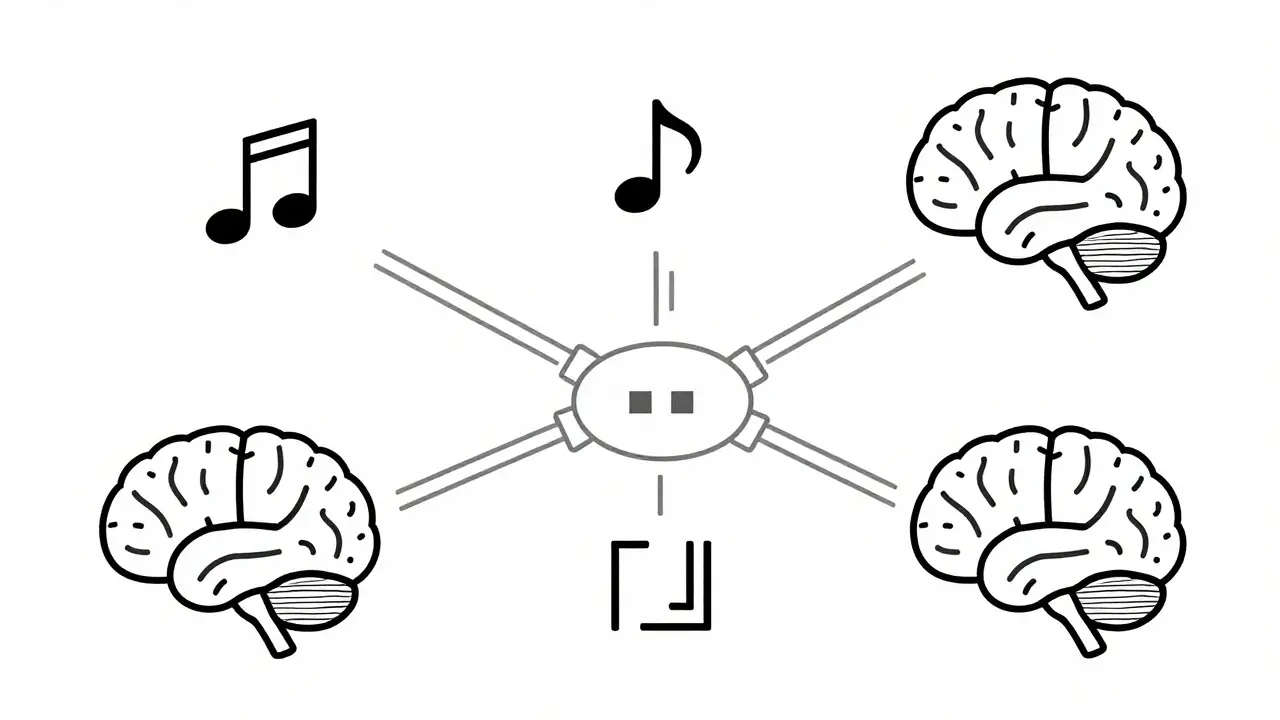
Mixture-of-Experts changes this by replacing those standard layers with multiple "expert" subnetworks. Think of these experts as mini-neural networks, each potentially good at different things-one might be great at code, another at legal text, and another at creative writing. A learned component called a gating mechanism sits in front of these experts. Its job is simple: look at the input token and decide which experts should handle it.
Crucially, the gate usually activates only a small subset of these experts. In the popular Mixtral model, for example, there are eight experts per layer, but only two are active for any given token. This means that while the model has 47 billion total parameters, it only uses about 13 billion active parameters per forward pass. This sparsity is where the magic-and the savings-come from.
The Cost Savings: Why Everyone Is Talking About MoE
The primary reason companies are rushing toward MoE is economics. Specifically, the cost of inference (running the model to generate answers) and training.
Empirical studies from 2025 confirm that MoE models can deliver between 4 to 16 times compute savings compared to dense models with matched perplexity (a measure of prediction quality). The Switch Transformer, an early pioneer in this space, reported a seven-fold pretraining speedup simply by adopting this architecture. More recently, DeepSeek-v3 demonstrated remarkable efficiency. By combining MoE sparsity with a technique called Multi-head Latent Attention (MLA), they reduced their Key-Value (KV) cache size by over 93 percent compared to a dense model of similar capability. They trained this massive model for an estimated $5.6 million using FP8 mixed precision-a feat that would have cost tens of millions more with traditional dense methods.
For production services, this translates directly to lower electricity bills and higher throughput. Because the model processes tokens using fewer active parameters, it can handle more requests simultaneously without buying more GPUs. If you are running an API service, MoE allows you to serve more users with the same hardware infrastructure.
The Hidden Costs: Memory and Routing Overhead
If MoE were perfect, everyone would use it. But the savings in computation come with significant penalties elsewhere. The biggest issue? Memory.
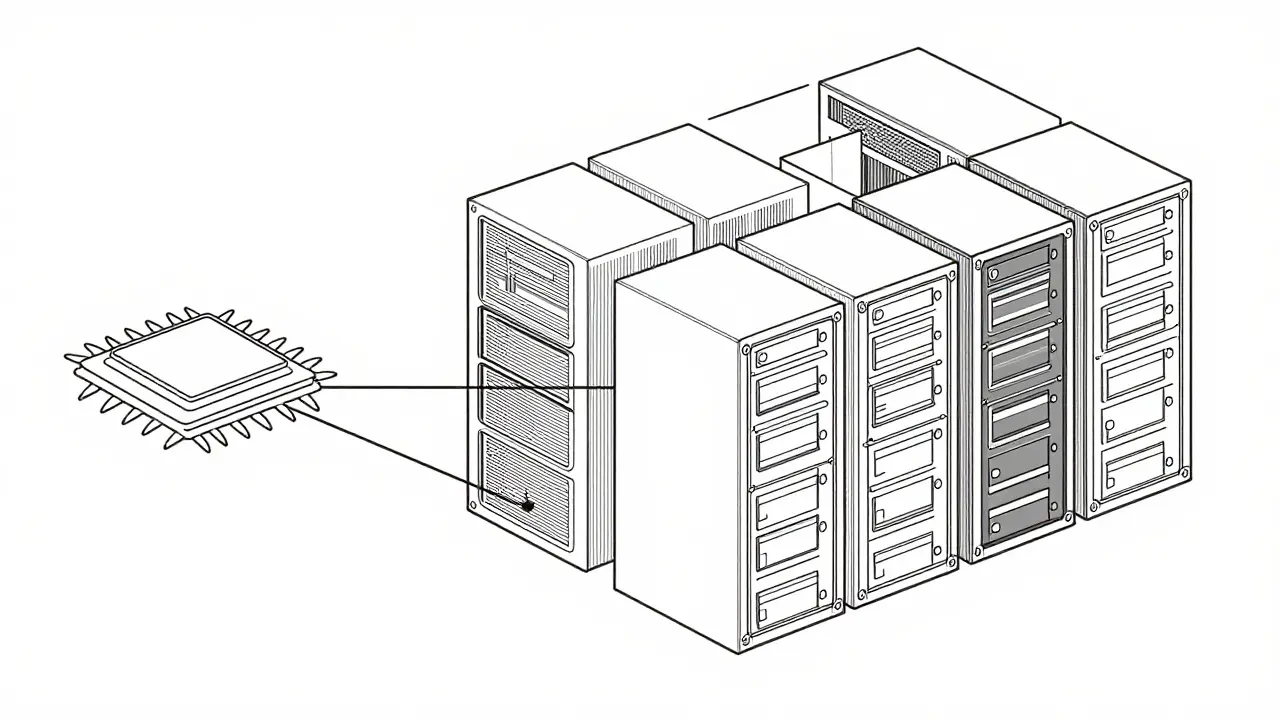
While the model only *computes* with a few experts, it must still *store* all of them in RAM. Going back to our hospital analogy: even if the triage nurse sends the patient to only two doctors, all ten doctors must still be present in the building, ready to be called. In technical terms, a model with eight experts of 7 billion parameters each requires 56 billion parameters of memory storage, even though only 13 billion are used per token.
This creates a bottleneck. High-end GPUs like the H100 or Blackwell series have limited high-bandwidth memory (HBM). You might fit the active parameters easily, but loading the entire expert bank can push you into slower system memory or require more expensive hardware configurations. This is often referred to as the "memory wall."
Then there is the routing overhead. The gating network itself takes time and compute to make decisions. For very small models or simple tasks, the cost of deciding which expert to use might outweigh the savings gained by not using the others. Furthermore, in distributed training setups, tokens routed to different experts might end up on different machines. This causes communication latency-the time spent shuffling data across network cables-which can become a major bottleneck during training.
| Feature | Dense Model | Mixture-of-Experts (MoE) |
|---|---|---|
| Active Parameters | All parameters active per token | Only top-k experts active (e.g., 2 out of 8) |
| Total Memory Footprint | Equal to total parameters | Sum of all expert parameters (much larger) |
| Compute Efficiency | Lower; scales linearly with size | High; 4-16x savings at matched quality |
| Training Complexity | Standard optimization | Complex; requires load balancing & stability tuning |
| Inference Latency (Low Batch) | Predictable and low | Can be higher due to routing/memory fetch |
| Scalability | Limited by compute budget | Can scale to trillions of parameters efficiently |
Quality Tradeoffs: Is MoE Smarter?
Does splitting the brain into parts make it smarter? Generally, yes-but with nuances. MoE models excel because they allow for specialization. Different experts can develop distinct skills. One might become exceptionally good at mathematics, while another masters nuanced idioms. This leads to superior performance on complex, multi-domain tasks.
However, quality isn't guaranteed. A major risk in MoE is "expert collapse," where the gating mechanism learns to send all tokens to just one or two "lazy" experts, ignoring the rest. This wastes capacity and degrades performance. To prevent this, researchers use load-balancing losses-mathematical penalties added during training to force the model to distribute tokens evenly among experts. Getting this balance right is tricky. Too much pressure for balance can hurt accuracy; too little, and you lose the benefits of sparsity.
Additionally, fine-tuning MoE models can be less efficient than dense models. When you adapt a dense model to a specific domain, every parameter adjusts slightly. In an MoE model, if your new domain data doesn't trigger the right experts, those experts won't learn anything. This "optimization mismatch" means you sometimes need more data or careful hyperparameter tuning to get the same level of domain adaptation as a dense counterpart.
Solving the Problems: Compression and New Techniques
Researchers aren't sitting idle while these problems persist. Recent advances in 2025 and 2026 have introduced clever ways to mitigate MoE's downsides.
One breakthrough is Expert-Selection Aware Compression (EAC-MoE). Developed by Chen et al., this technique recognizes that not all experts are equally important. It couples quantization-aware router calibration to prevent "expert-shift" (where compressed weights change routing behavior) and prunes low-frequency experts based on actual usage patterns. The result? A 4 to 5 times reduction in memory usage and a 1.5 to 1.7 times improvement in throughput, with accuracy losses kept below 1.25 percent. This directly attacks the memory wall problem.
Another promising approach is knowledge integration from unselected experts. Systems like HyperMoE aggregate intermediate signals from experts that weren't chosen for the final output. This allows the model to benefit from the collective wisdom of the full team without paying the full computational price, refining predictions without adding runtime cost.
Cost-aware routing is also emerging. Instead of just picking the best experts, the gate assigns scores based on both expertise and computational expense. This enables the model to dynamically balance quality against hardware constraints, which is crucial for deploying on edge devices or cost-sensitive cloud environments.
Who Should Use MoE Today?
So, should you switch to MoE? It depends on your resources and goals.
You should consider MoE if:
- You need to scale to hundreds of billions or trillions of parameters. Dense models at this scale are prohibitively expensive to train and run.
- Your workload involves high-throughput inference (many concurrent users). The sparse activation allows for better batching and lower average latency per token.
- You have diverse tasks. If your model handles code, medical queries, and creative writing, expert specialization will likely boost quality.
- You have access to advanced compression techniques or sufficient GPU memory to hold the full expert bank.
You should stick with Dense models if:
- You are building a smaller model (under 10-20 billion parameters). The routing overhead may negate the compute savings.
- You have limited memory bandwidth. If your GPUs struggle to load the full parameter set, MoE will choke on memory transfers.
- You need simple, stable fine-tuning. Dense models are easier to adapt to niche domains without worrying about load balancing or expert collapse.
- You lack the engineering team to manage the complexity of distributed MoE training.
The Future of Sparse AI
We are still in the early innings of the MoE revolution. As hardware evolves-with chips designed specifically for sparse matrix operations-the memory and routing bottlenecks will lessen. We are already seeing MoE integrated with other innovations, like the MLA attention mechanism in DeepSeek-v3, suggesting a future where efficiency gains compound rather than compete.
For now, MoE represents a fundamental shift in how we think about scaling AI. It moves us away from the brute-force approach of "more parameters equals smarter" toward a more nuanced strategy of "smarter allocation equals better results." If you can manage the complexity, the payoff in cost and capability is undeniable.
What is the main difference between MoE and Dense models?
In a Dense model, every parameter is activated for every input token. In a Mixture-of-Experts (MoE) model, a gating mechanism selects only a small subset of "expert" subnetworks to process each token. This makes MoE computationally sparse, reducing the number of calculations per token while maintaining a large total parameter count.
Why does MoE require more memory than Dense models?
Although MoE models only activate a fraction of their parameters during computation, all expert parameters must remain loaded in memory (RAM/VRAM) so they can be selected instantly if needed. A model with 8 experts has 8x the memory footprint of a single dense layer of equivalent size, even if only 2 experts are active.
Is MoE faster than Dense models?
It depends on the context. For high-batch-size inference (many users at once), MoE is significantly faster and more efficient because it reduces compute load. However, for low-batch-size or single-user scenarios, the overhead of routing and memory fetching can sometimes make MoE slower or comparable to a well-optimized dense model.
What is "expert collapse" in MoE training?
Expert collapse occurs when the gating mechanism learns to route almost all tokens to one or two "easy" experts, leaving the others unused. This defeats the purpose of having multiple specialists and reduces model capacity. It is prevented using load-balancing loss functions during training.
Which real-world models use Mixture-of-Experts?
Notable examples include Mixtral 8x7B and 8x22B from Mistral AI, Google's Switch Transformer, Meta's Llama 3 variants (which include MoE versions), DeepSeek-v3, and xAI's Grok. These models demonstrate that MoE has moved from research labs to production deployment.
 Artificial Intelligence