
Category: Artificial Intelligence - Page 3

Generative AI is reshaping leadership - not by replacing humans, but by freeing them to focus on what matters most: people, strategy, and trust. Learn how top leaders are using it to drive real change.

Multimodal AI can generate images and audio from text-but it also risks producing harmful content. Learn how content filters for images and audio are evolving to block hidden threats, what providers like Google and Amazon are doing, and why current systems still fall short.

Large language models are transforming education by creating personalized learning paths that adapt to each student’s needs. From reducing teacher workload to helping students with disabilities, AI tutors are making learning more accessible-when used wisely.
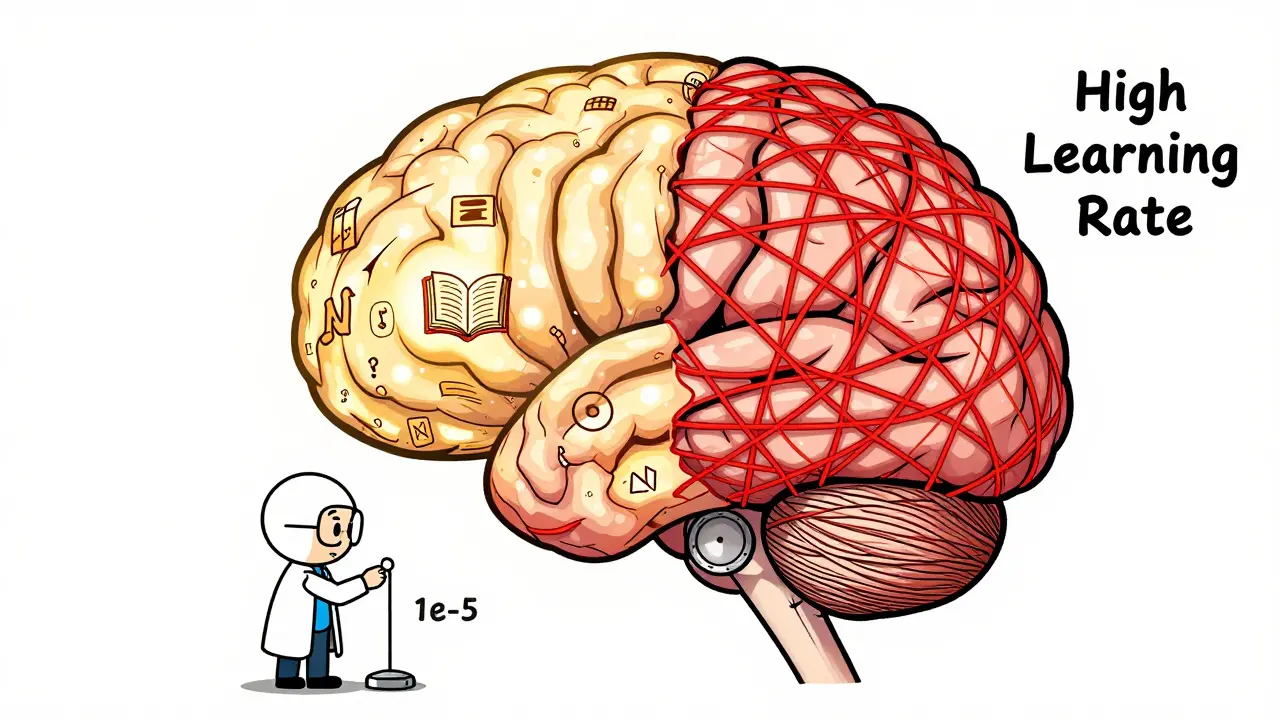
Learn how to fine-tune large language models without losing their original knowledge. Discover the best hyperparameters, methods like LoRA and FAPM, and real-world trade-offs that keep models accurate and reliable.

Few-shot fine-tuning lets you adapt large language models with as few as 50 examples, making AI usable in data-scarce fields like healthcare and law. Learn how LoRA and QLoRA make this possible-even on a single GPU.

Non-developers are building apps faster than ever using AI tools-but most don’t know how to secure them. Learn the three rules to avoid breaches, reduce risk, and ship safe vibe-coded apps without writing a line of code.

Prompt robustness ensures AI models handle typos, rephrasings, and messy inputs without crashing. Learn how MOF, RoP, and keyword choices make LLMs more reliable in real-world use.

This article explains how AI-generated dark patterns manipulate users, with real examples and regulations. Learn a 5-step ethical audit to prevent deceptive designs and protect digital trust.
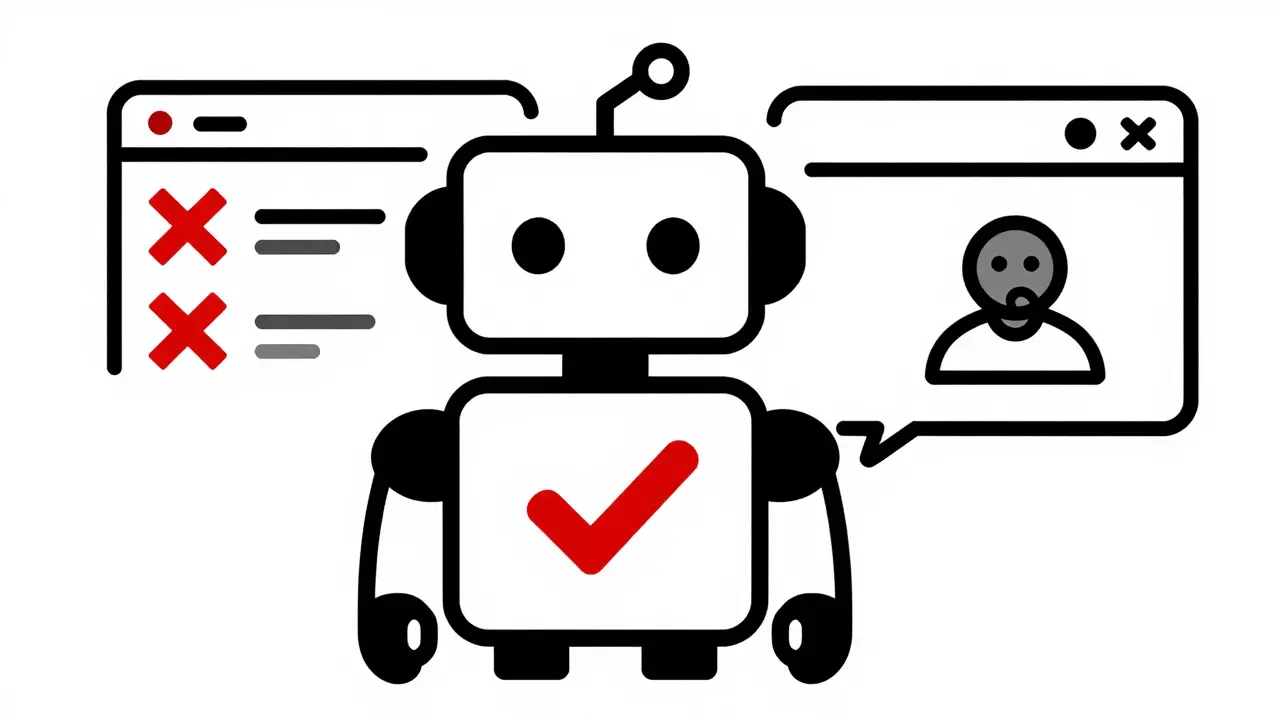
Discover why traditional metrics fail for compressed LLMs and how modern protocols like LLM-KICK and EleutherAI LM Harness accurately assess performance. Learn key dimensions, implementation steps, and future trends in model compression evaluation.

Discover how rotary embeddings, ALiBi, and memory mechanisms enable AI models to handle up to 1 million tokens. Learn key differences, real-world impacts, and future trends in long-context AI.

Reinforcement Learning from Prompts (RLfP) automates prompt optimization using feedback loops, boosting LLM accuracy by up to 10% on key benchmarks. Learn how PRewrite and PRL work, their real-world gains, hidden costs, and who should use them.

Generative AI can now describe images for alt text, helping make the web more accessible. But accuracy gaps, especially for people with disabilities, mean human review is still essential.
Categories
 Artificial Intelligence
Archives
Recent-posts

Predicting Performance Gains from Scaling Large Language Models
Mar, 15 2026

Few-Shot Fine-Tuning of Large Language Models: When Data Is Scarce
Feb, 9 2026
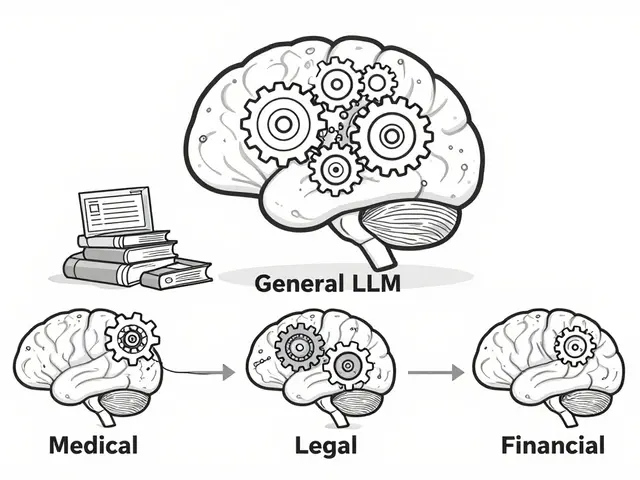
Domain Adaptation in NLP: Fine-Tuning Large Language Models for Specialized Fields
Feb, 24 2026

Reinforcement Learning from Prompts: How Iterative Refinement Boosts LLM Accuracy
Feb, 3 2026

Build vs Buy for Generative AI Platforms: A Practical Decision Framework for CIOs
Feb, 1 2026