
Author: Phillip Ramos - Page 10

Learn how to design fair productivity baselines before deploying generative AI. Discover methods to measure time, quality, and output accurately to calculate real ROI and avoid biased comparisons.

Explore how ethical AI agents for code use policy-as-code and guardrails to enforce compliance by default, ensuring legal and ethical operations without constant human oversight.

Discover how startups use vibe coding to slash MVP development time by 50%. Learn about AI tools like Lovable and Cursor that enable rapid prototyping without deep technical skills.

Master testing strategies for vibe-coded architectures. Learn how to apply unit, contract, and E2E tests to AI-generated code to avoid logical errors and ensure reliability.

Discover how curriculum learning and optimized data mixtures accelerate LLM scaling in 2026. Learn the 60-30-10 rule, performance gains, and implementation tips from MIT-IBM and NVIDIA research.

Learn how to conduct risk assessments and draft impact statements for LLM projects. Explore frameworks for identifying bias, hallucinations, and privacy leaks, plus practical mitigation strategies for 2026.

Learn how to budget for LLM programs in 2026. Avoid 400% cost overruns by mastering inference forecasting, phased contingencies, and FinOps strategies.

Secure vibe-coded apps with WAFs, RASP, and rate limits. Learn how to defend AI-generated code against Base44-style vulnerabilities and OWASP risks.

Discover the key design patterns like Vertical Slice Architecture and Context Engineering that make LLM-assisted vibe coding successful and maintainable.

Learn how dependency injection transforms fragile AI-generated code into production-ready backends. Discover FastAPI implementation patterns, testability improvements, and security best practices for vibe-coded applications.

Learn how schema-constrained prompts force LLMs to output valid JSON by restricting token generation. Explore tools, trade-offs, and best practices for reliable structured data.

Explore how to measure data quality for LLM training using heuristic and model-based filters. Learn about cascaded pipelines, cost trade-offs, and best practices for cleaning massive datasets.
Categories
 Artificial Intelligence
Archives
Recent-posts

Tokenizer Design Choices and Their Impacts on LLM Quality
Apr, 6 2026

Curriculum and Data Mixtures: Accelerating LLM Scaling in 2026
May, 31 2026
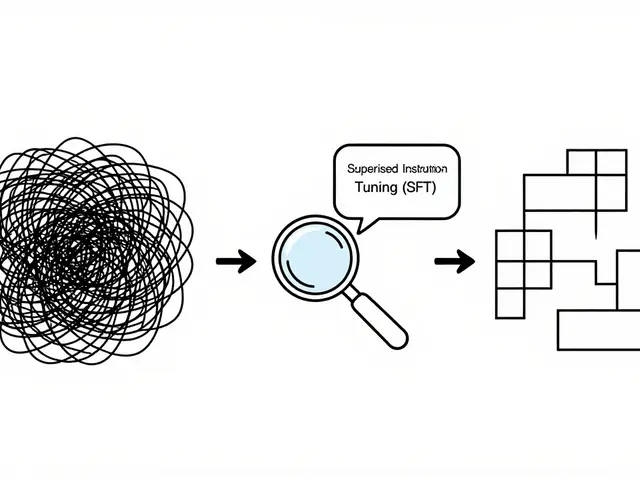
How Next-Gen LLMs Actually Follow Instructions: From RLHF to AutoIF
May, 16 2026

Long-Context AI Explained: Rotary Embeddings, ALiBi & Memory Mechanisms
Feb, 4 2026

Human-in-the-Loop Operations for Generative AI: Review, Approval, and Exceptions Strategy Guide
Mar, 26 2026